






What's Happening?
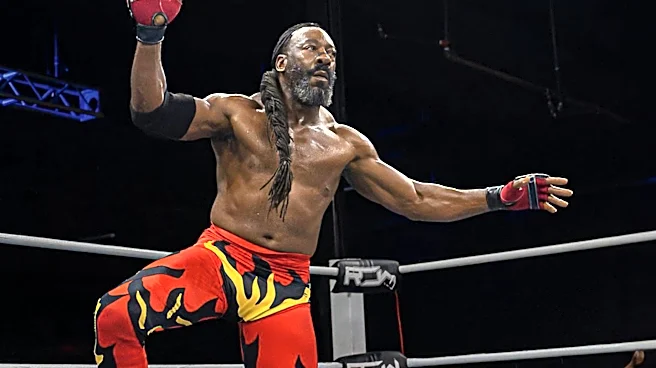
WWE's Booker T, during an episode of his 'Hall of Fame' podcast, discussed All Elite Wrestling's (AEW) distinct approach to professional wrestling. He noted that AEW aims to provide an alternative to WWE, offering a style closer to independent wrestling. Booker T observed
that some wrestlers, despite significant momentum, have struggled to integrate successfully into AEW. He specifically mentioned CM Punk and Matt Cardona, suggesting they didn't fit in with the younger roster's perspective on the industry. Booker T also drew parallels to Cody Rhodes's success in WWE after his departure from AEW, implying that certain wrestlers are more suited for 'entertainment wrestling' rather than solely match-focused performances. He believes AEW is attempting to change how people watch wrestling, which he acknowledges as their prerogative.
Why It's Important?
Booker T's commentary highlights a significant dynamic within the professional wrestling industry, particularly the contrasting philosophies between established promotions like WWE and newer alternatives like AEW. His observations underscore the challenges wrestlers face when transitioning between different company cultures and wrestling styles. For AEW, this perspective from a veteran like Booker T could prompt internal reflection on talent integration and creative direction. For fans, it offers insight into the perceived differences in product presentation and wrestler utilization. The discussion also touches upon the broader evolution of professional wrestling, where different promotions cater to varied audience preferences, influencing talent acquisition strategies and long-term career trajectories for wrestlers.
What's Next?
The ongoing discourse regarding AEW's wrestling philosophy and its impact on talent will likely continue to be a topic of discussion among wrestling analysts and fans. As AEW continues to evolve and sign new talent, the integration of these individuals into the existing roster and their on-screen presentation will be closely watched. The success or struggles of future signees could further validate or challenge Booker T's observations. Additionally, the competitive landscape between AEW and WWE will continue to shape how both promotions develop their product, potentially leading to further differentiation in their approaches to storytelling, match structure, and character development to appeal to their respective fan bases.
Beyond the Headlines
Beyond the immediate implications for AEW and its roster, Booker T's comments touch upon the broader cultural shifts within professional wrestling. The rise of AEW as a viable alternative has fostered a more diverse ecosystem, allowing for different interpretations of what professional wrestling can be. This competition encourages innovation but also creates distinct environments where certain wrestling styles or personalities may thrive more than others. The 'entertainment wrestling' versus 'indie wrestling' distinction, as highlighted by Booker T, reflects a fundamental debate within the industry about its artistic and commercial direction. This ongoing dialogue influences not only the content presented to viewers but also the training, development, and career paths of aspiring professional wrestlers.