

What's Happening?
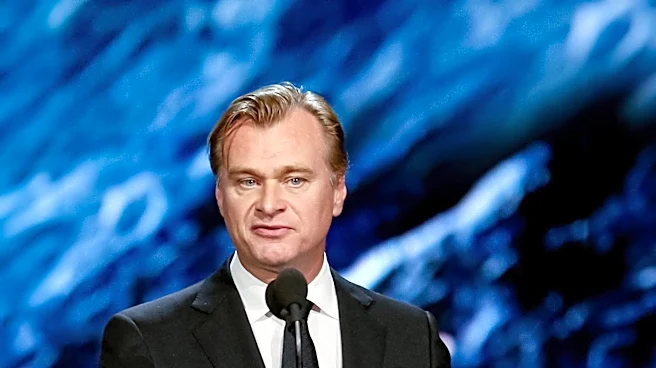
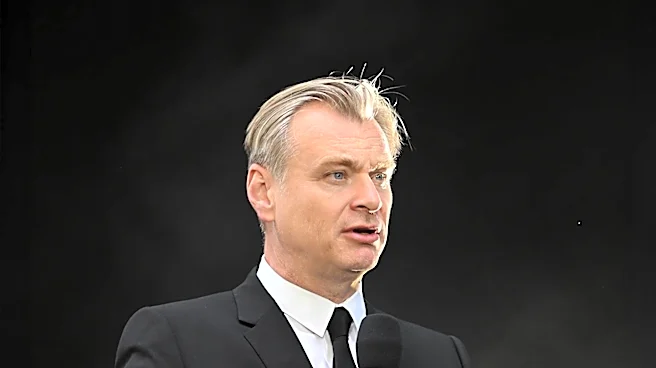
Christopher Nolan, in his capacity as president of the Directors Guild of America (DGA), is calling for studios to be held accountable for protecting their films against unauthorized exploitation by artificial intelligence (AI). Nolan emphasizes that
while directors typically do not own the copyrights to their films, their livelihoods and economic interests are directly tied to how these copyrights are protected and monetized, especially in the context of AI. He argues that the DGA has a legitimate interest in ensuring studios prevent AI licensing and use from overreaching. Nolan also challenges the notion that AI is too complex for ordinary rules of responsibility, stating that companies use 'AI' as a catchall term to absolve themselves of accountability. This stance aligns with the American Federation of Musicians' 'Human Made, Human Paid' campaign, which advocates for consent, credit, and compensation for musicians whose work is used in AI.
Why It's Important?
This initiative by Christopher Nolan and the DGA highlights a critical and evolving challenge in the entertainment industry: the intersection of intellectual property rights, creative labor, and artificial intelligence. As AI technology advances, the unauthorized use of copyrighted material for training AI models and generating new content poses a significant threat to creators' economic stability and artistic control. Nolan's call for accountability underscores the need for clear legal frameworks and contractual agreements that protect human creators in the AI era. The distinction between copyright ownership (often held by studios) and the 'personhood rights' of individual artists (such as name, image, likeness, and voice) is becoming increasingly vital. This debate will shape how creative works are valued, licensed, and protected in the digital age, impacting not only directors and musicians but all creative professionals.
What's Next?
The DGA's push for studio accountability is likely to intensify discussions and negotiations within Hollywood regarding AI usage and copyright. This could lead to new clauses in guild agreements, stricter licensing terms for AI developers, and potentially new legislation aimed at protecting creators' rights. The 'Human Made, Human Paid' campaign by the American Federation of Musicians, which demands consent, credit, and compensation for musicians' work used in AI, provides a precedent for other creative guilds. Nolan's inclusion of language in 'The Odyssey' credits warning against AI training use signals a proactive approach by filmmakers to assert control over their work. This collective action from creative guilds could lead to a more unified front in demanding fair treatment and compensation for human creativity in the face of rapidly advancing AI technologies.
Beyond the Headlines
The core issue raised by Christopher Nolan extends beyond mere copyright protection; it delves into the fundamental question of human identity and value in an AI-driven world. The ability of AI systems to mimic or generate content 'in the style of' a particular artist, as in the example of asking an AI to 'make it look like a Christopher Nolan movie,' blurs the lines between inspiration and exploitation. This raises complex ethical and legal questions about 'personhood rights'—the inherent rights of individuals to control their name, image, likeness, and creative identity, which are distinct from copyright ownership. The outcome of these debates will not only redefine intellectual property law but also influence how society values human creativity and labor in an increasingly automated landscape. It challenges the industry to consider whether the economic benefits of AI should solely accrue to copyright holders or be shared equitably with the human creators whose work makes those copyrights valuable.