






What's Happening?
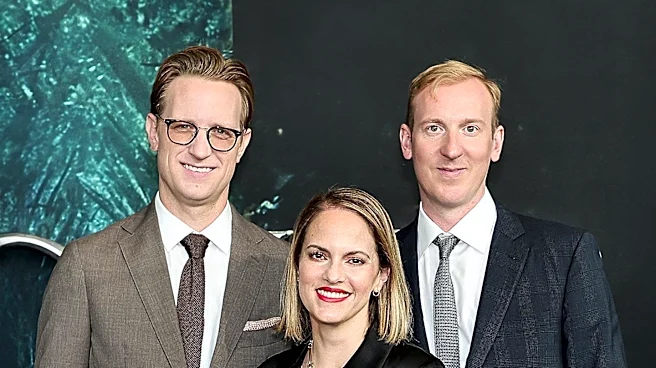
Bobby Finger and Lindsey Weber, the hosts of the popular podcast 'Who? Weekly,' have released a new book titled 'I Want to Be Famous: When Everybody and Nobody Is a Celebrity.' The book, published by Crown, delves into the evolving landscape of celebrity
and fame, building upon the podcast's unique lexicon and analysis of 'Whos' (fame-hungry individuals) and 'Thems' (established celebrities). Launched in 2016, 'Who? Weekly' has gained a significant following for its humorous yet insightful commentary on lower-tier celebrities and the mechanisms of modern fame. The book expands on these themes, offering a historical perspective on celebrity culture and examining how social media has blurred the lines between different levels of fame. It explores various aspects of celebrity, from the rise of influencers to the phenomenon of 'nepo babies,' and how public figures navigate apologies and authenticity in the digital age.
Why It's Important?
The release of 'I Want to Be Famous' is significant for several reasons. It solidifies the cultural impact of 'Who? Weekly,' transitioning its niche podcast discussions into a more academic and enduring format. This move reflects a broader trend where successful digital content creators leverage their platforms to produce traditional media, expanding their reach and influence. The book's analysis of the 'fame machine' provides valuable insights into contemporary media consumption and the psychological aspects of celebrity worship, which are increasingly relevant in an era dominated by social media. For the entertainment industry, it offers a critical lens through which to understand audience engagement and the construction of public personas. Furthermore, it highlights the changing role of entertainment journalism, as the authors, both trained journalists, explore how the internet has disrupted traditional media gatekeepers and empowered celebrities to control their own narratives.
What's Next?
Following the book's release, Bobby Finger and Lindsey Weber will likely engage in promotional activities, including book tours, interviews, and continued discussions on their podcast. The book's academic tone, while still infused with the podcast's humor, suggests it could become a reference point for media studies and cultural analysis. Its success may encourage other podcast hosts to explore similar ventures, further blurring the lines between audio content, print media, and academic discourse. The ongoing evolution of celebrity culture, particularly with new social media platforms and trends, will provide continuous material for both the podcast and potential future works by Finger and Weber. The book's reception will also indicate the public's appetite for deeper, more critical examinations of fame beyond superficial gossip.
Beyond the Headlines
Beyond its immediate impact, 'I Want to Be Famous' offers a profound commentary on the human desire for connection and validation in an increasingly mediated world. The authors' exploration of 'Whos' and 'Thems' isn't just about celebrity; it's about how society constructs and consumes narratives of success, authenticity, and public identity. The book implicitly critiques the superficiality of modern fame while also acknowledging its irresistible allure. It delves into the ethical dilemmas faced by both celebrities and the media that covers them, particularly in an age where personal boundaries are constantly eroded by social media. By examining the historical trajectory of fame, Finger and Weber invite readers to reflect on their own relationship with public figures and the broader cultural implications of a society obsessed with visibility and recognition, ultimately questioning what it means to be 'known' in the 21st century.