







What's Happening?
Paris, a global leader in luxury experiences, is encountering difficulties in consistently delivering a high-end experience where public and private services intersect. While private entities like couture houses, fine dining establishments, and luxury hotels
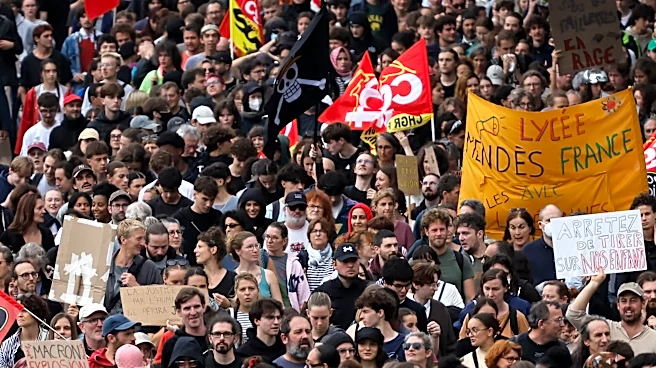
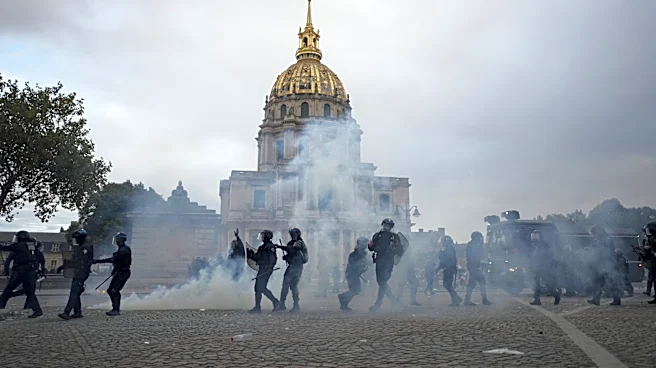
(such as The Ritz Paris, Le Bristol, Hôtel de Crillon, Cheval Blanc Paris, La Réserve, Four Seasons George V, and Hôtel Plaza Athénée) maintain exceptional standards in design, gastronomy, wellness, and personalized service, the city struggles with the 'last mile' of the luxury journey. This includes aspects like airport transfers, taxi services, pavement accessibility, and tax-refund processes. The issue stems from the fact that while brands can control their private operations, they cannot independently manage public infrastructure and services such as street cleanliness, public transport accessibility, or preventing strikes. Despite a record-breaking tourism year in 2025, with nearly 50 million visitors and €24 billion in revenue, the city faces a 'value-delivery test' where ordinary failures in public services can significantly detract from the overall luxury perception.
Why It's Important?
This situation highlights a critical challenge for global luxury destinations: the increasing expectation for seamless, end-to-end premium experiences that extend beyond private establishments. For Paris, a city that commands premium rates and attracts high-contribution visitors, inconsistencies in public services can undermine its pricing power and reputation. Travelers now compare Paris not just with other European capitals but with destinations like Tokyo, Singapore, and Dubai, which often offer superior operational clarity and convenience. The inability to ensure smooth transitions from airport to hotel, or accessible public transport, can lead to dissatisfaction, even if the private luxury components are flawless. This impacts not only the tourism industry but also the city's broader economic strategy, as sustained investment in luxury tourism depends on meeting these evolving traveler expectations. The issue also underscores the need for better integration and coordination between public and private sectors to maintain a competitive edge in the global luxury market.
What's Next?
To address these challenges, Paris needs to focus on improving the interface between public and private services. This includes investing in trained drivers, efficient luggage handling, accessible routes, trustworthy booking systems, street-level hospitality, and rapid problem resolution. Public infrastructure projects, such as the extension of Metro line 14, have shown positive impacts on both premium and mass-market travelers, but more is needed, particularly for Charles de Gaulle Airport. The city's airport investment program is crucial for its luxury positioning, with a focus on predictable door-to-door travel times and effective recovery from disruptions. Furthermore, there's a call for better route intelligence from hotels, transparent pricing for accessible transport, and improved public-realm service levels, including cleaning, lighting, and public toilet availability. Digital solutions, such as a comprehensive visitor-information network with real-time accessibility status and verified emergency guidance, are also being developed to enhance the visitor experience.
Beyond the Headlines
The discussion extends beyond mere operational efficiency to deeper ethical and social considerations. The article points out that a luxury strategy cannot ignore the visible hardship of homelessness and poverty, which are social conditions requiring comprehensive policy solutions rather than cosmetic exclusion. A luxury approach that merely displaces vulnerable populations is deemed ethically indefensible and operationally temporary. This suggests that true urban luxury should encompass safety, hygiene, dignity, and access for all residents and visitors, recognizing that social stability is a fundamental component of destination infrastructure. Businesses are encouraged to fund neighborhood partnerships, staff housing solutions, and credible social procurement, rather than focusing solely on superficial improvements. This broader perspective implies that the long-term success of Paris as a luxury destination is intertwined with its ability to create an inclusive and well-functioning city for everyone.