






What's Happening?
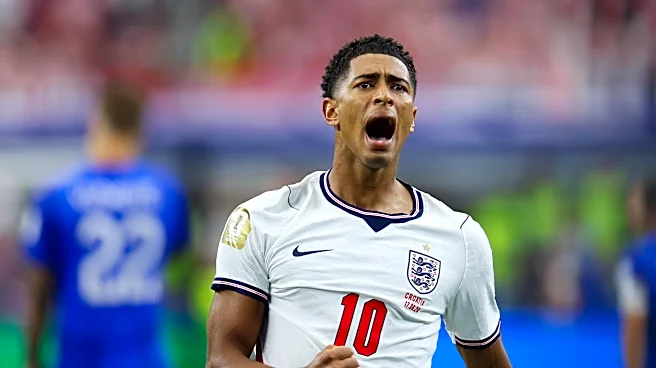
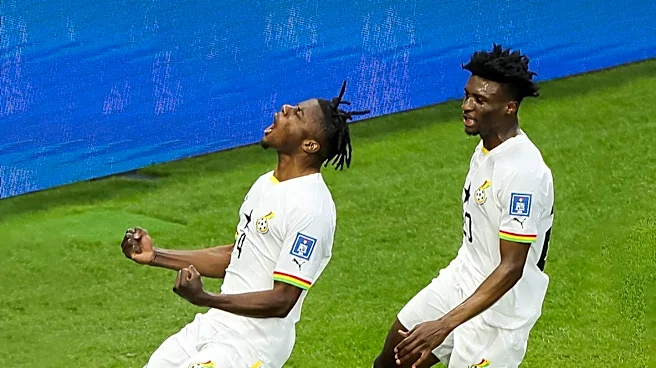
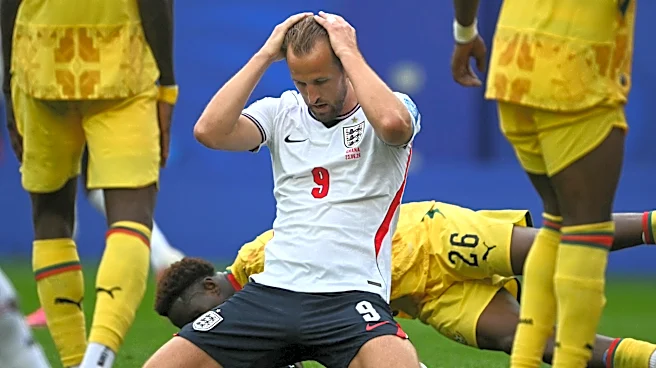
During a World Cup group stage match between England and Ghana, England midfielder Jude Bellingham was seen covering his mouth while speaking to Ghana forward Jordan Ayew. This action led to questions about why Bellingham was not penalized with a red
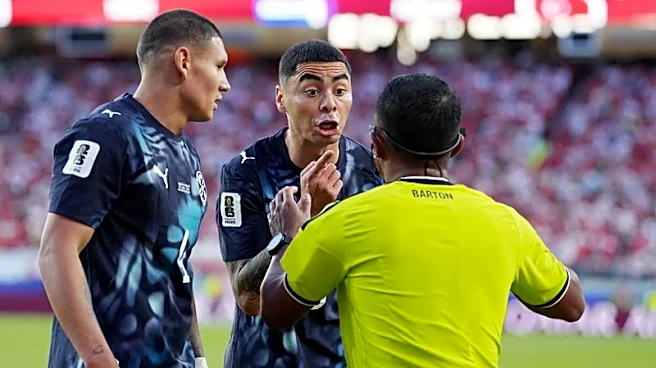
card, as Paraguay's Miguel Almiron had been for a similar gesture in a previous match. The key difference, according to FIFA's guidelines, is that Bellingham's interaction was not confrontational, whereas Almiron's was. FIFA's rule, introduced for this tournament, states that a red card should be issued if the mouth-covering gesture occurs during a confrontation. Bellingham's conversation with Ayew was deemed non-confrontational, thus not warranting a red card.
Why It's Important?
This incident highlights the nuances in FIFA's new rule regarding mouth-covering gestures, which aims to prevent players from concealing potentially abusive or discriminatory remarks. The rule's implementation is significant as it seeks to promote respect and transparency on the field. The decision not to penalize Bellingham underscores the importance of context in officiating, as the rule is not applied uniformly but rather based on the nature of the interaction. This approach could influence how referees manage similar situations in future matches, potentially affecting team dynamics and player behavior.
What's Next?
Bellingham will be available for England's next match against Panama, where a win would secure their position as group leaders. The ongoing application of this rule will be closely watched, as it could set precedents for future tournaments. Teams and players may need to adjust their communication strategies to avoid penalties, while referees will continue to interpret the rule's application on a case-by-case basis.