




What's Happening?
Stand-up paddleboarding (SUP) is gaining popularity as a versatile water sport that provides a full-body workout and opportunities for various recreational activities. Participants paddle while standing or sitting on a stable board, engaging core muscles,
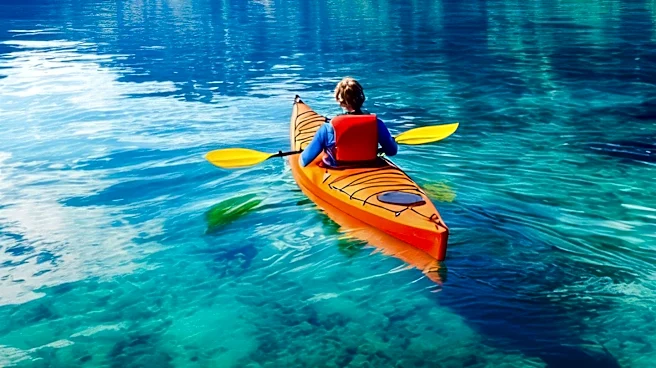
legs, and back for stabilization. Beyond intensive cardio training, SUP boards can be used for yoga or as a relaxing platform on the water. Many modern SUP models are inflatable, allowing for easy portability as they can be deflated and stored in a backpack. The sport is accessible to individuals of all ages and fitness levels, offering a blend of physical activity and outdoor enjoyment. Some SUP boards also feature hybrid designs that allow for the attachment of a kayak seat, providing increased stability and comfort for longer trips or when facing stronger winds, effectively merging the benefits of both paddleboarding and kayaking.
Why It's Important?
The growing appeal of stand-up paddleboarding highlights a broader trend in fitness and recreation towards activities that combine physical health benefits with outdoor experiences. For individuals seeking alternatives to traditional gym workouts, SUP offers a refreshing option that engages multiple muscle groups—including the core, arms, shoulders, and legs—while improving coordination and muscular endurance. The portability of inflatable SUPs makes water sports more accessible to a wider audience, as equipment can be easily transported without the need for specialized vehicles. The development of hybrid SUP-kayak boards further expands the sport's appeal, catering to those who desire both the challenge of paddleboarding and the stability of kayaking, thereby increasing participation and market demand for adaptable water sports equipment.
What's Next?
As stand-up paddleboarding continues to grow in popularity, manufacturers are likely to innovate further, focusing on enhanced portability, stability, and multi-functional designs. The market may see more advanced hybrid boards that seamlessly transition between SUP and kayak modes, potentially integrating features for fishing, touring, or even small cargo transport. Rental services and guided tours in coastal and inland water destinations are expected to expand, offering more options for beginners and experienced paddlers alike. Additionally, fitness programs incorporating SUP, such as paddleboard yoga or high-intensity interval training (HIIT) on water, could become more prevalent, attracting a diverse range of fitness enthusiasts looking for novel ways to stay active.
Beyond the Headlines
The rise of stand-up paddleboarding reflects a cultural shift towards wellness activities that emphasize connection with nature and holistic health. Beyond its physical benefits, SUP offers mental advantages, promoting mindfulness and stress reduction through engagement with natural environments. The sport's adaptability, from intense workouts to serene relaxation, caters to a wide spectrum of preferences, fostering a more inclusive approach to outdoor recreation. This trend also underscores the increasing consumer demand for versatile and portable recreational gear, influencing product development across the outdoor and sporting goods industries. The emphasis on safety, such as wearing leashes and buoyancy aids, also highlights a growing awareness of responsible participation in water sports.