




What's Happening?
The iShares Global Infrastructure ETF (IGF) is actively navigating a complex landscape characterized by interest-rate sensitivity and emerging growth opportunities, particularly within the energy transition. The ETF, which tracks the S&P Global Infrastructure Index,
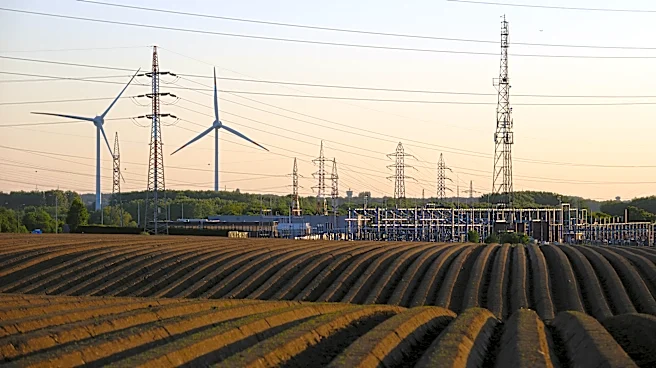
holds a significant portion of its assets in utilities (40%), industrials (39% – including airports, toll roads, and ports), and energy infrastructure (20%). Its performance is heavily influenced by central bank policies, as utilities and toll-road operators are sensitive to bond yields. The electrification trend, driven by rising power demand from data centers and electric vehicles, presents a structural tailwind for the utilities sector, necessitating substantial capital investment in network upgrades. Additionally, the ETF's transportation and energy midstream assets are tied to global trade volumes and energy flows, introducing both cyclical upside and macroeconomic risks. With over 60% of its assets outside the United States, currency movements also play a role in returns for U.S.-based investors.
Why It's Important?
This situation is important for U.S. investors and the broader economy due to several factors. The ETF's exposure to global infrastructure, including a 36% allocation to the United States, means that its performance reflects and influences domestic infrastructure development. The emphasis on electrification and grid investment directly impacts U.S. energy policy and the transition to renewable sources, potentially driving job creation and technological advancements in the energy sector. For U.S. investors, the ETF offers a way to gain exposure to a durable yet cyclical asset class, balancing defensive cash-flow characteristics with sensitivity to interest rates and regulatory changes. However, the fund's concentration in a limited number of large-cap names and its tilt toward regulated utilities mean that individual company execution and policy decisions, both domestically and internationally, will significantly affect returns. The sensitivity to global interest rates also means that U.S. monetary policy decisions will have a direct impact on the valuation and financing costs of these capital-intensive infrastructure projects.
What's Next?
Several key factors will influence the future outlook for global infrastructure investments. The trajectory of global interest rates is paramount; a gradual easing cycle by central banks could benefit the utilities-heavy portfolio by lowering discount rates and improving financing conditions. Conversely, a resurgence in inflation leading to higher rates could negatively impact valuations. The accelerating electrification theme will continue to drive investment in transmission, distribution, and generation, creating opportunities for companies like NextEra Energy and Constellation Energy within the portfolio. The recovery of global travel and trade will be crucial for transportation assets such as airports and toll roads. Furthermore, evolving commodity and export dynamics will affect energy midstream operators. Investors will also need to monitor regulatory and environmental policy shifts, which can impact pipeline utilization and overall project viability. Periodic rebalancing of the underlying index will also subtly reshape portfolio exposure over time.
Beyond the Headlines
The focus on global infrastructure, particularly in the context of the energy transition, points to a long-term structural shift with profound implications. The modernization of grids, scaling of renewable generation, and decarbonization of transport systems represent massive capital expenditure cycles that will span decades. This transition is not merely an economic opportunity but also a critical component of addressing climate change and ensuring energy security. The increasing demand for infrastructure, driven by demographic trends, urbanization, and the need to refurbish aging systems in developed markets, suggests a sustained demand for real assets. However, this also brings challenges, including rising sovereign and corporate leverage, the potential for regulatory intervention to compress returns, and the risk of persistently higher interest rates. The ethical dimension of infrastructure development, particularly concerning environmental impact and equitable access, will also become increasingly prominent as these projects unfold globally.