
What's Happening?
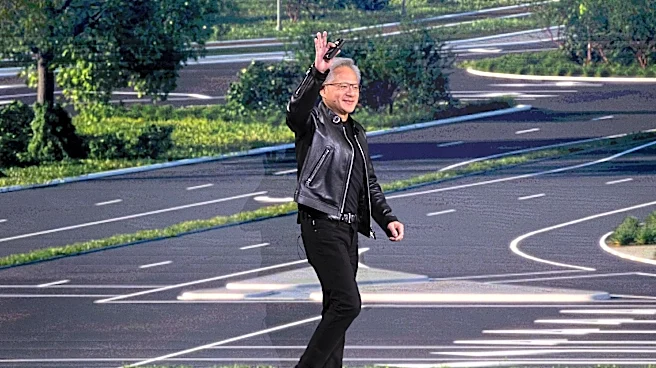
Speculation regarding the succession of Nvidia's CEO, Jensen Huang, has intensified, with several high-profile executives being mentioned as potential candidates. Reports from various outlets have named
Thomas Kurian, CEO of Google Cloud; Sanjay Mehrotra, Chairman and CEO of Micron Technology; and Nikesh Arora, Chairman and CEO of Palo Alto Networks, as individuals discussed in connection with the role. Additionally, other names like Jay Puri and Colette Kress have also surfaced in broader discussions. However, Nvidia has not made any official statements or confirmations regarding a succession plan or specific candidates. The current reporting largely reflects commentary and speculation rather than verified internal information from Nvidia.
Why It's Important?
The leadership of Nvidia is critically important given its central role in the artificial intelligence and semiconductor industries. Jensen Huang, as a founder-CEO, has been instrumental in shaping the company's strategy and success. Any potential change in leadership, or even the discussion of it, can significantly impact investor confidence, market valuation, and the company's strategic direction. The lack of a formal succession plan, as reported by TechCrunch, suggests that Huang believes in a deep internal bench of leaders, which contrasts with external speculation focusing on outside executives. This dynamic creates uncertainty for stakeholders who typically prefer clear succession strategies, especially for a company of Nvidia's size and market influence. The ongoing speculation highlights the market's intense interest in Nvidia's future leadership.
What's Next?
Until Nvidia issues an official statement, board communication, or regulatory filing, the discussions around CEO succession will remain speculative. The company's reported stance, where Huang believes a formal succession plan creates unnecessary hierarchy, suggests that an official announcement may not be imminent. However, the market will continue to watch for any signals, such as new executive appointments within Nvidia, changes in Huang's public statements regarding leadership, or any confirmed contact between Nvidia and external candidates. The ongoing commentary will likely continue to shape public perception, but without concrete information from Nvidia, these names will remain talking points rather than confirmed candidates for the CEO position.
Beyond the Headlines
The persistent speculation about Nvidia's CEO succession underscores a common challenge for founder-led technology companies: managing the transition from an iconic leader. Jensen Huang's deep involvement in Nvidia's product development and strategic vision makes his potential departure a significant event. This situation brings to light the tension between a founder's preference for organic leadership development and investor demands for clear, formal succession planning. It also highlights how media and market commentary can fill information vacuums, even without official company input. The discussion around candidates from diverse sectors like cloud computing, memory semiconductors, and cybersecurity reflects the broad impact of AI on various industries and the diverse skill sets potentially sought in a future leader for a company at the forefront of technological innovation.