



What's Happening?
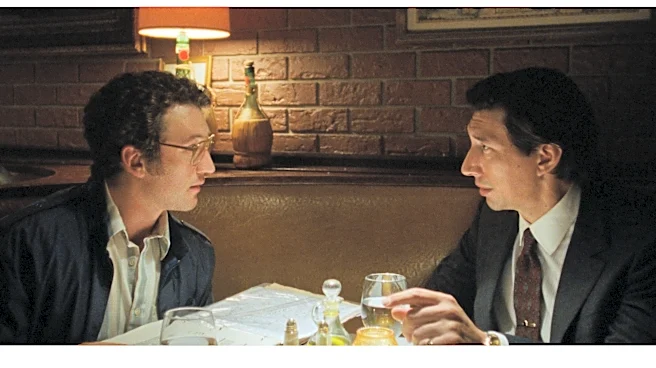
Josh Lucas is noted as a member of the stellar cast in Mary Harron's 2000 film adaptation of 'American Psycho.' The movie, which also stars Christian Bale, Chloe Sevigny, Justin Theroux, Jared Leto, and Willem Dafoe, is a screen adaptation of Bret Easton
Ellis's 1991 novel. Harron's film largely replaces the graphic violence of the book with a comedy of manners focusing on Wall Street culture. Christian Bale portrays the narcissistic protagonist, Patrick Bateman, an investment banker in 1980s New York City who is obsessed with appearances and engages in gruesome murders at night. The film leaves open the question of whether Bateman is a real serial murderer or a fantasist, subtly pointing to the leeway given to the elite.
Why It's Important?
The inclusion of Josh Lucas in the cast of 'American Psycho' highlights his early career involvement in a film that became a significant cultural touchstone. The movie itself is important for its satirical commentary on American capitalism and consumerism in the 1980s, particularly within the context of Wall Street. It explores themes of identity, narcissism, and the superficiality of elite society, resonating with audiences and critics for its unique approach to a controversial novel. The film's enduring relevance is demonstrated by its continued availability on streaming platforms and its ongoing discussion in cinematic analysis, showcasing how it subverted expectations and offered a distinct perspective on its source material.
What's Next?
While the article is a retrospective on the film, its continued availability on major streaming platforms like Netflix, Prime Video, YouTube, and Apple TV suggests ongoing accessibility for new and returning viewers. This ensures that the film, and the performances within it, including Josh Lucas's, remain part of contemporary cinematic discourse. Future analyses of 1980s cultural critiques or adaptations of controversial literature will likely continue to reference 'American Psycho,' maintaining its presence in film studies and popular culture.
Beyond the Headlines
The film's ambiguity regarding Patrick Bateman's actions—whether they are real or imagined—invites deeper psychological and philosophical interpretations. This ambiguity challenges viewers to consider the nature of monstrosity and the societal conditions that might enable or conceal such behavior among the elite. The film's comedic tone, a deliberate choice by director Mary Harron, also prompts reflection on how satire can be used to critique societal flaws, offering a less direct but equally potent commentary on violence and misogyny compared to the novel's explicit depictions. This artistic decision has contributed to the film's lasting impact and its place in discussions about adaptation and artistic interpretation.