





What's Happening?
Andreas Blattmann, co-inventor of the latent-diffusion technique that underpins Stable Diffusion and head of Black Forest Labs, asserts that image generation was a commercially successful 'detour' in the broader journey of artificial intelligence. According
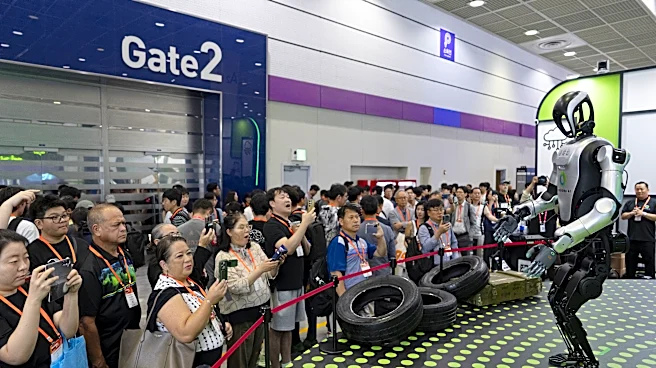
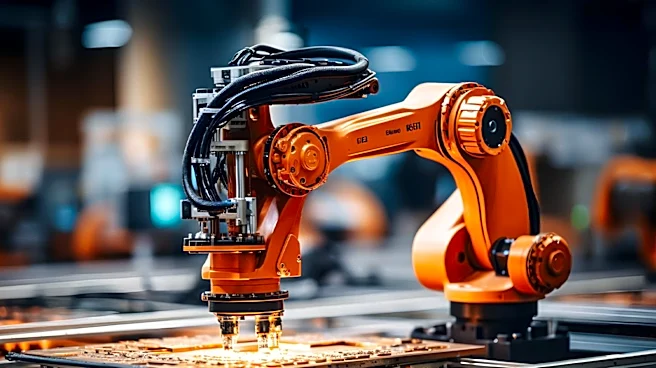
to Blattmann, the initial vision for his company, co-founded with Dustin Podell, centered on video as the pathway to achieving 'world understanding' for AI, ultimately leading to robotics. He predicts that 2027 will mark the year of robotics, with the first commercial applications of advanced AI models landing in real manufacturing settings. Blattmann emphasizes that the true goal has always been to develop models that comprehend how the physical world operates, with image generation serving as a stepping stone.
Why It's Important?
Blattmann's perspective signals a significant shift in the focus of cutting-edge AI research and development, moving beyond generative media to more tangible, real-world applications in robotics. This reorientation could have profound implications for U.S. industries, particularly manufacturing, logistics, and automation, as advanced AI-powered robots become more prevalent. The emphasis on 'world understanding' suggests a future where AI systems can interact with and navigate complex physical environments more effectively, potentially leading to breakthroughs in autonomous systems, smart factories, and even domestic robotics. This shift could also attract substantial investment into robotics research and development, creating new job opportunities and fostering innovation in related fields.
What's Next?
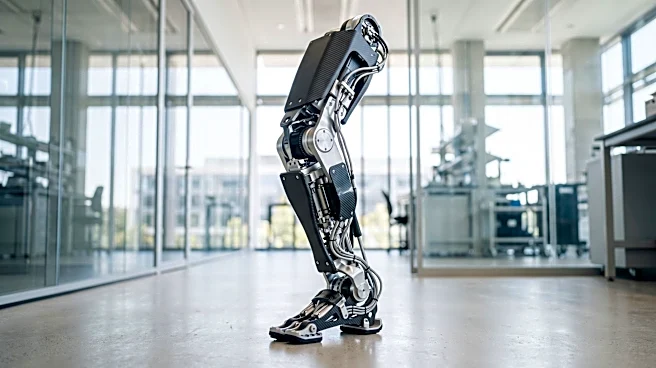
The declaration that 2027 will be the year of robotics suggests an accelerated timeline for the commercial deployment of AI-driven robotic solutions. This could lead to increased competition among technology companies to develop and integrate these advanced systems into various sectors. Research efforts will likely intensify around developing AI models that can better understand and interact with the physical world, moving beyond purely digital applications. Furthermore, the focus on robotics will necessitate advancements in hardware, sensor technology, and ethical frameworks for autonomous systems. Businesses in manufacturing and other physical industries should prepare for potential disruptions and opportunities arising from this technological evolution.
Beyond the Headlines
Blattmann's statement highlights a fundamental philosophical debate within AI development: whether the ultimate goal is to create sophisticated tools for human creativity (like image generation) or to build intelligent agents that can operate autonomously in the physical world. The pivot towards robotics suggests a long-term vision where AI transcends virtual domains to directly impact our physical reality. This raises ethical considerations regarding job displacement, the safety of autonomous systems, and the societal implications of increasingly intelligent machines. The pursuit of 'world understanding' for AI also touches upon deep questions about consciousness, intelligence, and the nature of reality itself, pushing the boundaries of what machines can achieve.