



What's Happening?
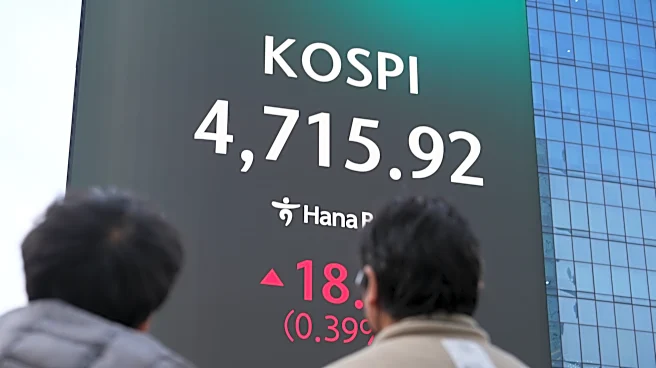
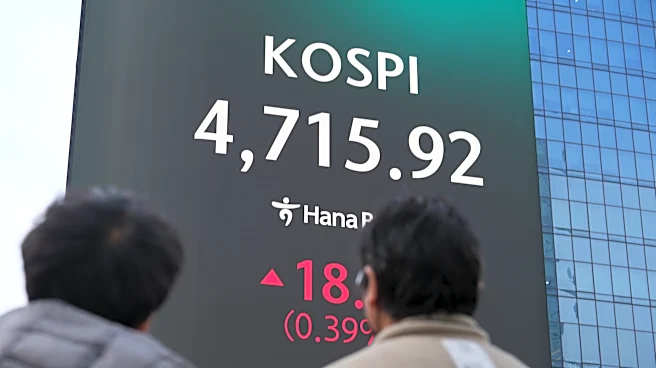
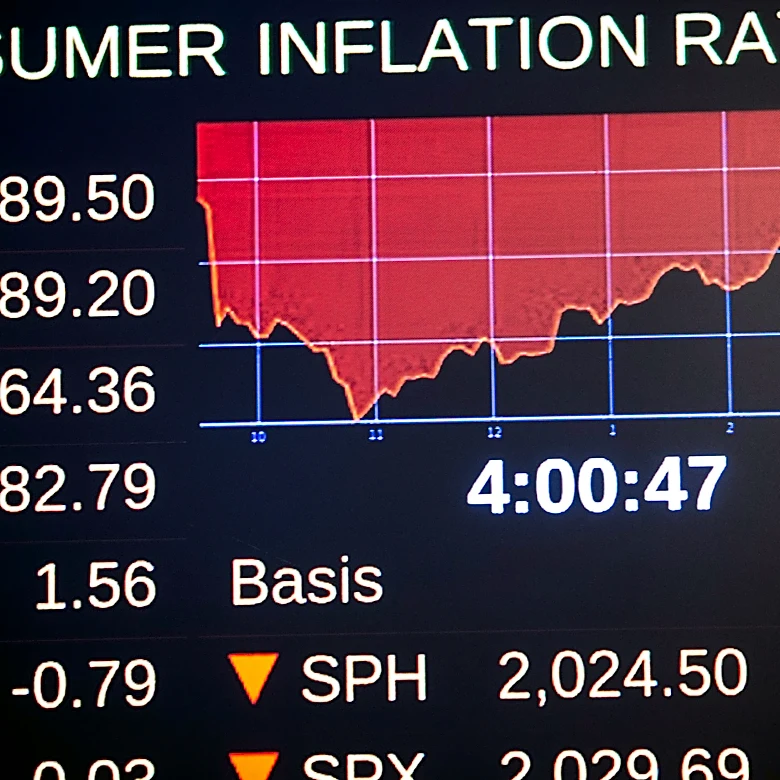
Baidu, China's leading search engine company, saw its Hong Kong shares rise by 4.8% on Friday. This increase occurred as Chinese stocks experienced their most significant rally in over two years, following Beijing's announcement of public support for
its stock market. Baidu is actively developing its Ernie AI models, indicating a continued investment in artificial intelligence technology. Other major Chinese tech companies, including Alibaba, Tencent, and JD.com, also reported substantial gains in their Hong Kong shares. Alibaba's shares rose by 7%, Tencent's by 3.2%, and JD.com's by 5.4%. This broad market uplift suggests a positive investor reaction to the Chinese government's intervention aimed at stabilizing and boosting the market. The rally highlights the interconnectedness of government policy and market performance in China's economic landscape.
Why It's Important?
The surge in Baidu's stock, alongside other major Chinese tech firms, is significant as it reflects the immediate impact of government intervention on market sentiment. For U.S. investors and businesses with exposure to Chinese markets, this rally could signal a period of increased stability or potential volatility depending on the sustainability of such government-backed boosts. The focus on AI development by companies like Baidu, which is building its Ernie AI models, underscores the ongoing global race in artificial intelligence. This could influence technological advancements and competitive landscapes in the U.S. and internationally. The broader implications for the global economy include how sustained government support in China might alter investment strategies and risk assessments for companies operating in or with ties to the Chinese market. The event also raises questions about the long-term health of a market that relies on state intervention for significant rallies.
What's Next?
The immediate focus will be on whether the rally in Chinese stocks, including Baidu's, can be sustained beyond the initial surge, particularly when Hong Kong trading resumes. Investors will be closely watching for real revenue growth from these companies, rather than just short-term market reactions to government announcements. Further scrutiny will be placed on cloud and AI spending by companies like Baidu, to ensure it is backed by paying customers and not just speculative investment. Additionally, the strength of cash on the balance sheets of these companies will be a key indicator of their financial health. For U.S. investors, the risk associated with Chinese ADRs, particularly concerning delisting rules if auditors are not inspected, remains a critical factor to monitor. The long-term effectiveness of Beijing's market backstop will be evaluated by its ability to foster organic growth and investor confidence.
Beyond the Headlines
The recent surge in Chinese stocks, propelled by Beijing's market support, extends beyond immediate financial gains to touch upon deeper economic and geopolitical implications. The intervention highlights the Chinese government's willingness to actively manage its economy and financial markets, which can be viewed as both a stabilizing force and a potential distortion of free market principles. For global economic observers, this raises questions about the true health and resilience of the Chinese economy, especially in sectors like technology where innovation is paramount. The reliance on state support could influence how international investors perceive the risk-reward profile of Chinese companies, potentially leading to a re-evaluation of investment strategies. Furthermore, the continued development of AI models by Baidu, supported by a government-backed market, could accelerate China's technological competitiveness, impacting global leadership in artificial intelligence and related industries. This dynamic interplay between state intervention, market performance, and technological advancement will likely shape future economic policies and international relations.