




What's Happening?
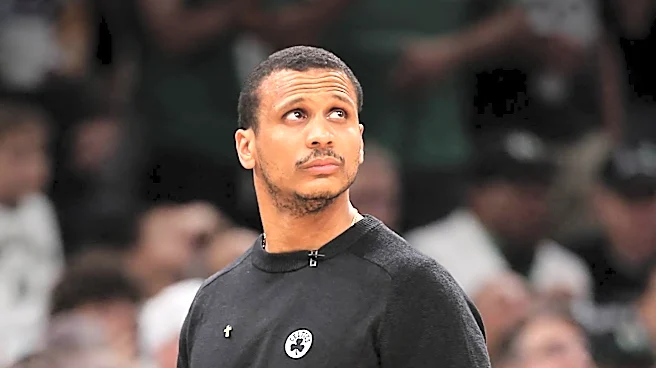
Joe Mazzulla, the head coach of the Boston Celtics, has severed his ties with Life Surge, a Christian organization known for its large, one-day events across the U.S. This decision follows allegations that Life Surge employs high-pressure sales tactics,
leveraging Christian faith to encourage attendees to purchase expensive financial education programs, which have reportedly led some students into substantial debt. Mazzulla stated that he 'completely backed out of it' once these allegations surfaced, emphasizing that he does not support the alleged practices. Life Surge, in response, has issued a statement asserting its disagreement with the characterization of their company and affirming their beliefs and work. The organization's events feature various celebrity speakers, including sports figures, and until recently, Tim Tebow was a prominent speaker who has also paused his relationship with the company to investigate the claims. Life Surge offers follow-up 'Impact Classes' and more in-depth, pricier education courses on topics like stock trading.
Why It's Important?
This development is significant as it highlights the increasing scrutiny faced by organizations that blend faith-based messaging with commercial ventures, particularly when high-pressure sales tactics are alleged. For public figures like Joe Mazzulla, whose platform is often used to share personal beliefs, such associations carry reputational risks. His swift disengagement underscores the importance of maintaining public trust and ethical standards, especially when an organization's practices are questioned. The allegations against Life Surge, involving potential financial exploitation under the guise of faith, could lead to broader discussions about consumer protection within faith-based communities and the responsibilities of public figures who endorse such groups. The situation also reflects a growing awareness among public figures to distance themselves from controversial affiliations to protect their personal brand and the integrity of their professional roles.
What's Next?
Life Surge is expected to continue defending its practices, as indicated by their statement refusing to apologize for their identity or work. The ongoing investigation by Tim Tebow into the allegations could further influence public perception and potentially lead to more public figures re-evaluating their involvement with the organization. For Joe Mazzulla, his clear stance is likely to mitigate any negative impact on his public image and his role with the Boston Celtics. The incident may prompt other organizations that combine faith and commerce to review their operational and marketing strategies to ensure transparency and ethical conduct. Regulatory bodies or consumer protection groups might also take a closer look at the financial education programs offered by such organizations, especially if more individuals come forward with complaints about high-pressure sales tactics or debt accumulation.
Beyond the Headlines
The situation with Life Surge and Joe Mazzulla touches upon the complex intersection of faith, finance, and public influence in the U.S. It raises questions about the ethical boundaries of leveraging religious platforms for commercial gain and the potential for exploitation when financial advice is intertwined with spiritual guidance. The incident could contribute to a broader societal conversation about the vulnerability of individuals seeking spiritual and financial betterment, and how easily these aspirations can be targeted by predatory practices. Furthermore, it highlights the evolving role of public figures as moral compasses, where their endorsements are not just about product promotion but also about aligning with ethical values. The swift reaction from Mazzulla and Tebow suggests a growing intolerance for practices that could be perceived as exploitative, even within faith-based contexts, potentially setting a precedent for greater accountability in similar ventures.