









What's Happening?
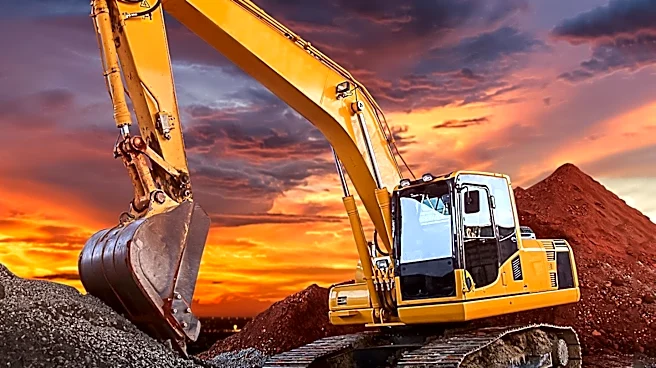
Komatsu has introduced the PC9000-12, its largest hydraulic mining excavator, with an option for a fully electric drive. This machine, weighing up to 896 metric tons, can move over 80 tons of material per scoop and is capable of shifting around 8,000
tons per hour. The electric version is powered by two motors and is tethered to the mine's grid, offering an alternative to traditional diesel engines. This development marks a significant step in the electrification of heavy machinery, particularly in the mining sector, where diesel has been the dominant power source. The electric option is available globally, reflecting a growing trend towards sustainable mining practices.
Why It's Important?
The introduction of an electric excavator by Komatsu represents a major shift in the mining industry towards more sustainable practices. As environmental regulations become stricter and the demand for cleaner energy sources increases, the availability of electric heavy machinery could reduce the carbon footprint of mining operations. This shift could also influence other sectors reliant on heavy machinery, encouraging further innovation and adoption of electric alternatives. The move aligns with global efforts to reduce emissions and transition to renewable energy sources, potentially setting a precedent for other manufacturers and industries.
What's Next?
The success of Komatsu's electric excavator could lead to increased demand for similar machinery, prompting other manufacturers to develop and offer electric options. Mining companies may begin to invest more in infrastructure to support electric machinery, such as grid connections and charging facilities. This transition could also drive advancements in battery technology and energy storage solutions, further supporting the shift towards electrification. As the industry adapts, regulatory bodies may introduce new standards and incentives to promote the use of electric machinery in mining and other heavy industries.