






What's Happening?
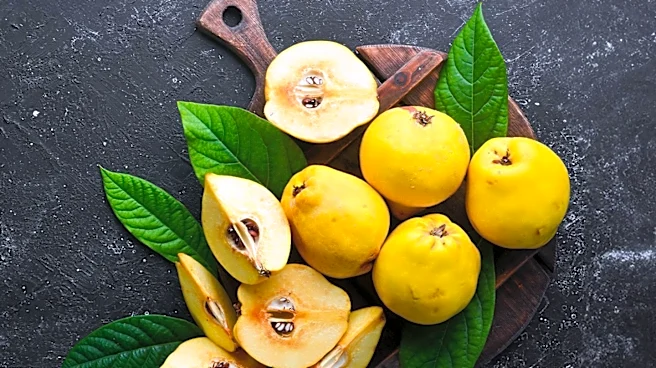
Chinese quince, botanically known as Pseudocydonia sinensis, is a fruiting species native to Asia, distinct from the quince grown in Europe and the Americas. These fruits, typically oval to oblong with smooth, glossy skin that ripens from green to golden
yellow, are not edible raw due to their high tannin content, which imparts a bitter and astringent flavor. However, cooking dissipates these tannins, transforming the flesh into a soft, tender, red-pink hue with a mellow, sweet, fruity, and subtly floral taste. Harvested in the fall, Chinese quince is highly valued in East Asia for its ornamental qualities, edible fruits, and traditional uses in medicine and culinary recipes. It is a source of vitamin C, fiber, potassium, and polyphenols, contributing to immune system strength, digestive regulation, fluid balance, and anti-inflammatory properties. The fruit is commonly used in jams, syrups, honey pickles, pies, stews, and even wine, pairing well with spices like cinnamon and nutmeg.
Why It's Important?
The significance of Chinese quince extends beyond its culinary applications, deeply embedding itself in the cultural fabric of East Asia. It symbolizes happiness, good luck, and prosperity, often given as gifts during special occasions in China to welcome fortune. In Japan, its name, Karin, is phonetically similar to 'karinu,' meaning 'not borrowing,' leading to its symbolism of freedom from debt and financial independence. The trees are also revered for their durable hardwood, used in construction for furniture and musical instruments. Medicinally, Chinese quince has a long history, mentioned in ancient texts as early as the 3rd century BCE, and is still utilized in traditional Chinese medicine for coughs and sore throats. Its recognition grew in the 1970s when studies highlighted its benefits for respiratory ailments, leading to its incorporation into cough medicines and throat lozenges. This dual role as a food source and a medicinal ingredient underscores its enduring importance in the region.
What's Next?
While Chinese quince is widely cultivated and consumed throughout East Asia, particularly in China, Japan, and Korea, its presence in Western markets remains limited. Future developments could involve increased awareness and demand in other parts of the world, potentially driven by growing interest in unique fruits, traditional medicine, and diverse culinary ingredients. Research into its nutritional and medicinal properties may also continue, potentially uncovering new applications or confirming existing traditional uses. As global culinary trends evolve, there might be opportunities for Chinese quince to be introduced into new recipes and product lines outside of its traditional regions. However, its current availability primarily through local fresh markets and direct growers in Asia suggests that broader commercialization would require significant efforts in cultivation, distribution, and consumer education.
Beyond the Headlines
Beyond its immediate uses, the story of Chinese quince highlights the rich biodiversity and cultural heritage embedded in traditional food systems. Its distinctiveness from European quince underscores the importance of recognizing and preserving regional plant varieties, each with unique characteristics and cultural significance. The fruit's journey from ancient medicinal texts to modern-day cough remedies illustrates the enduring value of traditional knowledge and its potential to inform contemporary health practices. Furthermore, the symbolic meanings attached to Chinese quince, such as prosperity and freedom from debt, reflect deeper cultural values and beliefs that shape human interactions with nature. This fruit serves as a reminder that many plants offer more than just sustenance; they are integral to cultural identity, historical narratives, and traditional healing practices, often holding meanings that transcend their physical properties.