



What's Happening?
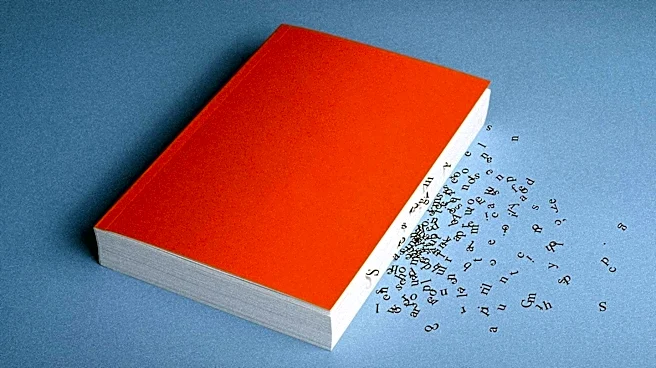
Penguin Random House has published 'Is It OK to Have a Child?' by acclaimed science writer and cultural critic Meehan Crist. The book confronts the complex question of procreation in an era defined by climate catastrophe and profound environmental uncertainty.
Crist explores how the climate crisis is reshaping perspectives on having children, framing it as both an intimate personal decision and an unavoidably political act. The narrative delves into deeply troubling questions about the future for children born into an unstable world and the environmental burden of adding to the global population. The book also critically examines how corporations and governments often shift responsibility for the climate crisis onto individuals, and how eugenicist ideologies can mask racism under the guise of science, particularly when linking fertility to environmental concerns across the political spectrum.
Why It's Important?
Meehan Crist's book tackles one of the most pressing and emotionally charged dilemmas of our time, resonating deeply with individuals and families in the U.S. grappling with environmental anxieties. Its publication by a major U.S. publisher like Penguin Random House signifies the mainstreaming of discussions around climate change's impact on personal life choices, including reproductive decisions. The book's analysis of how societal systems, rather than individual families, need reimagining for sustainability challenges conventional narratives and could influence public discourse on environmental policy and social responsibility. By highlighting the threats to reproductive freedoms and the resurgence of population debates, it underscores the critical need for nuanced conversations that avoid simplistic solutions and protect individual rights amidst global challenges. This work contributes significantly to the ongoing dialogue about climate justice and intergenerational equity.
What's Next?
The release of 'Is It OK to Have a Child?' is expected to spark further conversations and debates among readers, environmental activists, policymakers, and those considering parenthood in the U.S. The book's themes may be discussed in academic circles, book clubs, and media outlets, potentially influencing public opinion and personal decisions. It could also contribute to the broader movement advocating for systemic changes to address climate change, rather than placing the burden solely on individual choices. As the book gains traction, it may encourage other authors and publishers to explore similar complex intersections of personal life, ethics, and global crises, fostering a richer literary and intellectual landscape around these critical issues.
Beyond the Headlines
Beyond its immediate impact, 'Is It OK to Have a Child?' delves into profound ethical and philosophical questions about human existence and responsibility in the Anthropocene. It challenges the deeply ingrained societal expectation of procreation and forces a re-evaluation of what constitutes a 'good' future. The book's critique of how blame for environmental degradation is often misdirected from systemic issues to individual choices has significant implications for environmental activism and policy advocacy, encouraging a focus on structural change. Furthermore, by exposing the historical and contemporary links between population control rhetoric and eugenics, Crist's work serves as a crucial reminder of the importance of safeguarding reproductive autonomy and social justice in all climate-related discussions, preventing the weaponization of environmental concerns against marginalized communities.