


What's Happening?
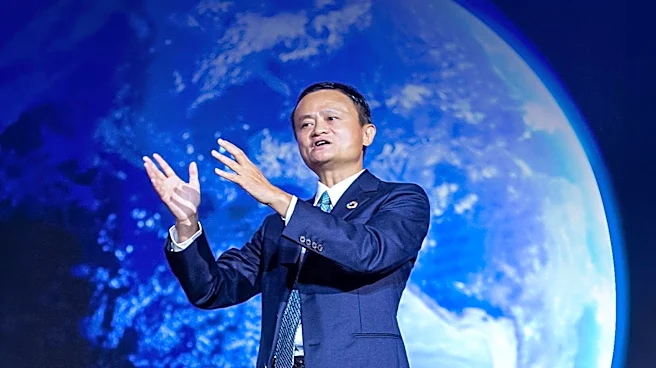
Alibaba founder Jack Ma made a rare public appearance at the offices of T-Head, Alibaba's chip design unit, on November 26, 2026. This visit comes as T-Head is preparing for a Hong Kong listing and China intensifies its efforts to develop domestic AI
chips. Photos circulated on social media show Ma interacting with T-Head employees and posing with engineers. T-Head confidentially filed for a Hong Kong IPO on September 11, with Alibaba disclosing the filing on November 10. The Hong Kong Stock Exchange has cleared the spin-off to proceed, pending further approvals. While the offering size and valuation remain undisclosed, market speculation suggests a raise of approximately US$2 billion to US$3 billion. T-Head is also on track to begin mass production of its Zhenwu V900 AI chip in the first quarter of 2027. Alibaba CEO Eddie Wu Yongming has stated that the company is already training its next-generation AI models on T-Head-designed chips, emphasizing the unit's strategic importance for Alibaba's full-stack AI capabilities.
Why It's Important?
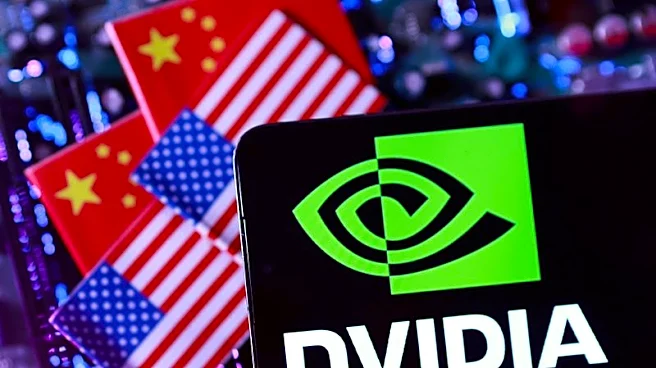
This development is significant for several reasons, particularly in the context of global technology and geopolitical dynamics. Jack Ma's visit, though symbolic, underscores the strategic importance of T-Head within Alibaba and for China's broader technological self-reliance agenda. As the U.S. continues to impose export restrictions on advanced AI chips to China, the development of indigenous chip capabilities, like those from T-Head, becomes crucial for Chinese tech giants. A successful IPO for T-Head would provide it with independent capital for further research and development, reducing its reliance on Alibaba's balance sheet and potentially accelerating China's progress in AI hardware. This move could also reshape the competitive landscape in the AI chip market, offering a domestic alternative to foreign suppliers like Nvidia and strengthening China's position in the global technology race. The mass production of the Zhenwu V900 AI chip could reduce supply chain uncertainties for Alibaba and other Chinese companies, mitigating risks associated with international trade policies.
What's Next?
The immediate next steps involve T-Head proceeding with its Hong Kong IPO, which will require further approvals from the listing committee and the China Securities Regulatory Commission. The market will be closely watching for disclosures regarding the offering size, valuation, and official listing date. The expected mass production of the Zhenwu V900 AI chip in the first quarter of 2027 will be a critical milestone, indicating T-Head's ability to scale its advanced chip manufacturing. Alibaba is likely to continue integrating T-Head's chips into its cloud services and AI model training, further solidifying its 'full-stack AI' strategy. Competitors, both domestic and international, will be monitoring T-Head's progress and market reception, potentially influencing their own investment and development strategies in the AI chip sector. The broader geopolitical context, particularly U.S. export controls, will continue to shape the urgency and direction of China's domestic chip development efforts.
Beyond the Headlines
Beyond the immediate financial and technological implications, T-Head's IPO and Jack Ma's visit highlight deeper trends in global technology and economic nationalism. The push for self-sufficiency in critical technologies like AI chips reflects a broader strategic imperative for nations to control their technological destinies, especially amidst increasing geopolitical tensions. This development could lead to a more fragmented global technology ecosystem, where different regions develop their own independent supply chains and standards. Ethically, the drive for domestic chip production raises questions about global collaboration versus competition in scientific and technological advancement. Legally, the success of companies like T-Head could influence future international trade policies and intellectual property disputes related to advanced technologies. Culturally, the narrative of technological self-reliance could further galvanize national pride and investment in STEM fields, potentially fostering a new generation of engineers and innovators focused on domestic solutions.