





What's Happening?
Ford Motor Company is expanding its global sourcing strategy by adding China as a key hub for vehicle production. This move includes the confirmation of the 2027 Ford Bronco Basecamp and Transit City models, which will be sourced from China. These vehicles
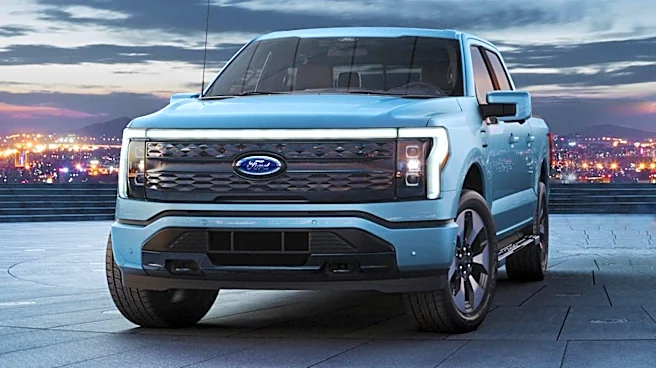
are products of Ford's long-standing joint venture with China's Jiangling Motors (JMC), a partnership that has been in place for over 30 years. The aim is to offer electric and plug-in hybrid options at potentially lower price points compared to vehicles sourced from Europe and the USA. Additionally, Ford global CEO Jim Farley has confirmed the development of an affordable mid-size pickup for international markets, slated for release next year. While its availability in specific markets like Australia is yet to be officially confirmed, the initiative underscores Ford's strategy to leverage global manufacturing capabilities to compete more effectively.
Why It's Important?
This strategic shift by Ford to increase sourcing from China has significant implications for the automotive industry and global supply chains. By leveraging its joint venture with JMC, Ford can potentially reduce manufacturing costs, allowing it to offer more competitively priced electric and plug-in hybrid vehicles. This could enhance Ford's market position against increasingly aggressive Chinese automakers, particularly in emerging markets. The introduction of an affordable mid-size pickup also addresses a growing demand for cost-effective utility vehicles globally. For the U.S. market, while the immediate impact on domestic production is not explicitly stated, a more robust global product portfolio could strengthen Ford's overall financial health and competitive standing against international rivals. This move reflects a broader trend of global automakers adapting their manufacturing footprints to optimize cost and market access.
What's Next?
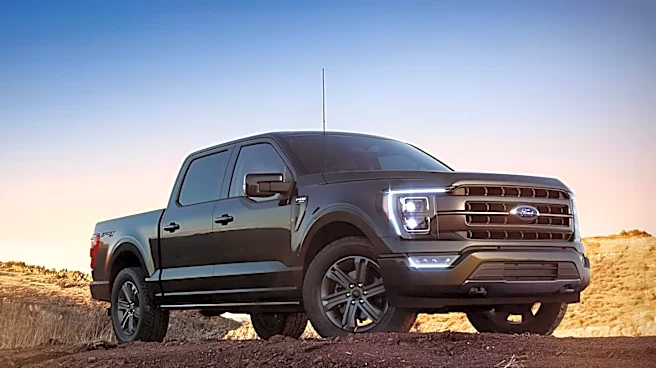
Ford is expected to continue integrating its Chinese manufacturing capabilities into its global product strategy, with more details on the affordable mid-size pickup's market availability anticipated next year. The company's Australian marketing director, Ambrose Henderson, indicated that Ford plans to expand its Australian line-up significantly, aiming to increase market coverage from 30 percent to 60 percent by 2030. This expansion could involve more China-sourced models, alongside vehicles from the U.S. (like the Mustang and F-150) and Europe (like the Transit van). Ford's strategy emphasizes leveraging its global centers of excellence for various products, suggesting a continued diversification of its manufacturing base. The success of these new models and the broader sourcing strategy will be closely watched as Ford navigates a competitive global automotive landscape.
Beyond the Headlines
Ford's decision to deepen its reliance on Chinese manufacturing for certain models highlights the complex interplay between global economics, supply chain resilience, and competitive pressures. While it offers cost advantages and access to advanced electric vehicle technology developed in China, it also raises questions about geopolitical risks and the potential for increased scrutiny regarding supply chain origins. This strategy could set a precedent for other Western automakers seeking to compete with lower-cost alternatives, potentially leading to a more integrated, yet potentially vulnerable, global automotive production network. The long-term implications include shifts in manufacturing employment, technological transfer, and the evolving definition of a 'global' car company in an era of increasing economic nationalism.