






What's Happening?
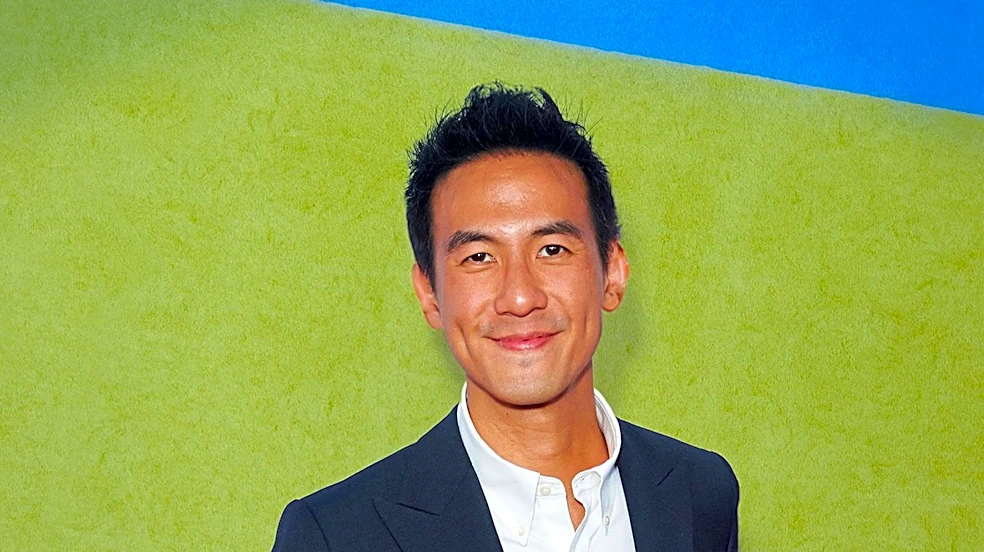
Korean-American actor Justin H. Min has expressed that acting in Korean productions offers greater freedom from stereotypes compared to Hollywood. Min, known for roles in Netflix’s 'The Umbrella Academy' and 'Beef,' stated in a roundtable interview in Seoul
that while performing in Korean is significantly more challenging, it provides more nuanced characters for Asian actors. He is currently promoting his new film, 'Journey There,' where he plays Min-jun, a German adoptee searching for his birth mother in Korea. Min emphasized that Korean productions write stories 'for us,' allowing for characters that defy typical Asian-American portrayals often seen in Hollywood. He has been selective about his U.S. projects to avoid stereotypical roles, noting that such opportunities are less frequent.
Why It's Important?
Min's comments underscore a significant disparity in representation and character development for Asian-American actors between Hollywood and Korean entertainment industries. This highlights a broader issue within the U.S. film and television landscape where diverse talent may find more fulfilling and complex roles abroad. For U.S. audiences and the entertainment industry, this trend suggests a potential loss of talent and diverse storytelling if Hollywood does not evolve to offer more authentic and varied roles for Asian-American performers. It also points to the growing global influence of Korean media, which is increasingly attracting international talent and providing platforms for narratives that resonate with a wider, more diverse audience, potentially shifting viewership and investment away from traditional U.S. productions.
What's Next?
The increasing visibility of actors like Justin H. Min choosing Korean productions could prompt further discussions within Hollywood about diversity and authentic representation. This might lead to increased pressure on U.S. studios and casting directors to create more complex and non-stereotypical roles for Asian-American actors. Min plans to continue working in Korea, where he has gained wider recognition and found a routine. His success in both U.S. and Korean markets could pave the way for other Korean-American actors to explore similar career paths, fostering a more interconnected global entertainment industry. The continued success of Korean content globally may also encourage more co-productions between U.S. and Korean entities, potentially bridging the gap in representation.
Beyond the Headlines
Min's experience touches on the cultural and psychological impact of representation in media. His desire to play 'messy' and 'dysfunctional' characters, rather than idealized or stereotypical ones, reflects a broader yearning for humanity and complexity in portrayals of minority groups. The challenge of acting in Korean, despite being Korean-American, also highlights the intricate nature of cultural identity and language proficiency. This situation raises questions about what constitutes 'authentic' representation and whether an actor needs to be fully fluent in a language to portray a character from that culture effectively. His journey also illustrates the evolving landscape of global entertainment, where national borders are becoming less rigid in career opportunities for artists, leading to a richer, more diverse tapestry of storytelling worldwide.