





What's Happening?
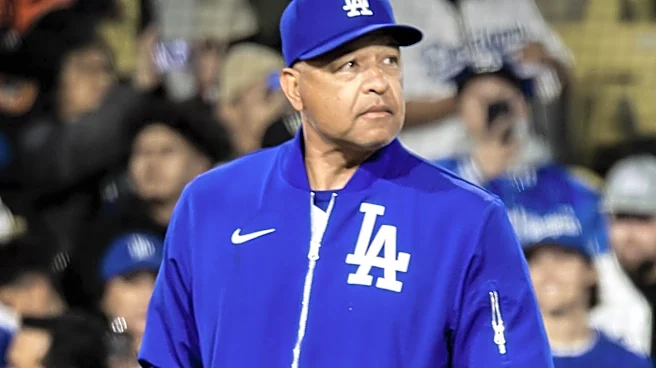
Los Angeles Dodgers manager Dave Roberts has publicly expressed dissatisfaction with pitcher Edwin Diaz's performance during his minor league rehabilitation assignment. With the Dodgers having secured a postseason berth, Roberts faces critical decisions
regarding his October roster. Diaz, a right-hander, is currently in Triple-A attempting to regain his form. Roberts stated, 'He needs to pitch better. It hasn’t been good,' referring to Diaz's ongoing efforts. In his initial 16 appearances with Los Angeles, Diaz struggled significantly, recording an 11.85 ERA and a 2.56 WHIP, allowing 18 earned runs in just 13.2 innings. His rehabilitation stint with Triple-A Oklahoma City has also been marked by severe command issues, with an 8.00 ERA over 9.0 innings. These struggles raise serious concerns about his readiness to rejoin the Dodgers' bullpen for the playoffs.
Why It's Important?
The performance of key relievers is often crucial for teams making a deep postseason run in Major League Baseball. The Dodgers, a perennial contender, rely on a strong bullpen to close out games and navigate high-pressure situations. Diaz's inability to regain his form poses a significant challenge for Roberts and the team's championship aspirations. His struggles could force the Dodgers to re-evaluate their bullpen strategy, potentially placing more strain on other relievers or necessitating a search for alternative options. The public pressure from Roberts underscores the high stakes involved and the team's commitment to fielding the most effective roster possible for October. For Diaz, his future with the team, particularly in high-leverage situations, hinges on a dramatic improvement in his performance, impacting his career trajectory and potential contract negotiations.
What's Next?
Edwin Diaz's immediate future involves continuing his rehabilitation assignment in Triple-A. His path to the Dodgers' playoff roster is contingent on a significant and rapid improvement in his performance, particularly in terms of velocity and command. Roberts's comments indicate that Diaz will not be recalled until he demonstrates he can effectively execute his pitches. The Dodgers will closely monitor his outings, looking for signs of consistency and effectiveness. If Diaz fails to show marked improvement, it is unlikely he will be included in the postseason bullpen, potentially opening up a spot for another reliever. The team will need to make a final decision on his roster status as the playoffs approach, which could involve exploring other bullpen options or relying more heavily on their existing relief corps.
Beyond the Headlines
This situation highlights the intense pressure professional athletes face, especially in high-stakes environments like a playoff-bound MLB team. The public nature of Roberts's comments, while direct, serves as a clear message to Diaz about the expectations for his performance. It also reflects the competitive nature of professional sports, where past achievements do not guarantee future roster spots, particularly when performance declines. The mental and physical toll of regaining form after struggles can be immense for athletes. Furthermore, this scenario underscores the strategic complexities managers face in balancing player development and rehabilitation with the immediate demands of winning. The Dodgers' handling of Diaz could also influence how other teams manage similar situations with struggling high-profile players in the future.