




What's Happening?
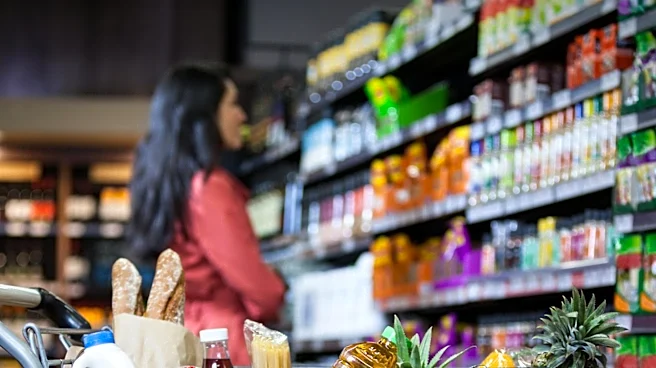
Despite a slowdown in overall inflation, grocery prices in the U.S. remain elevated, causing frustration among consumers. The phenomenon, described as 'rockets and feathers,' refers to the rapid increase in food prices post-pandemic and their slow decline.
Companies like PepsiCo have raised prices due to increased costs for ingredients and packaging, maintaining higher prices even as demand faltered. The U.S. Department of Agriculture reports that food prices at home are expected to rise by 2.7% this year, slightly above the historical average. This persistent high pricing is partly due to retailers' reluctance to lower prices on inventory purchased at higher costs and consumers' reduced deal-hunting behavior as prices stabilize.
Why It's Important?
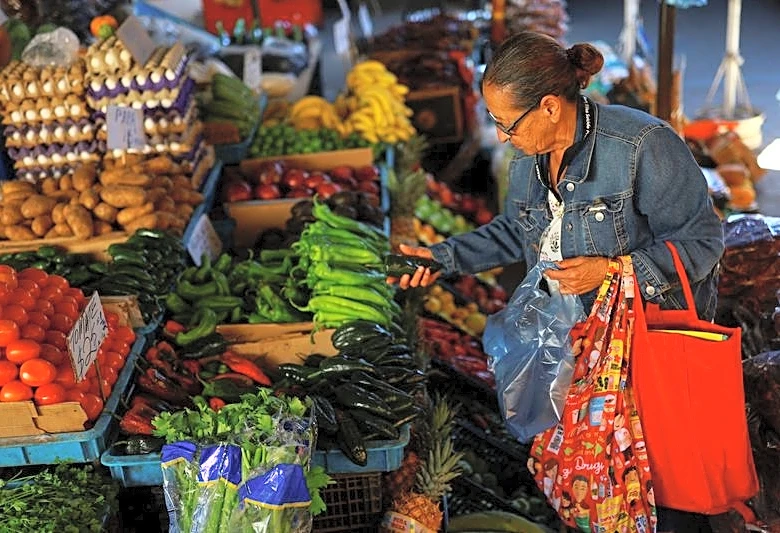
The sustained high grocery prices have significant implications for the U.S. economy and consumer behavior. As prices remain high, consumers are shifting towards discount retailers and store brands to manage their budgets, impacting traditional grocery chains. This shift could lead to a long-term change in shopping habits, affecting market dynamics and competition. Additionally, the high cost of living pressures consumers to adjust their spending, potentially reducing discretionary spending in other areas. The situation underscores the complex interplay between global supply chain issues, consumer behavior, and economic policy, highlighting the challenges in achieving price stability.
What's Next?
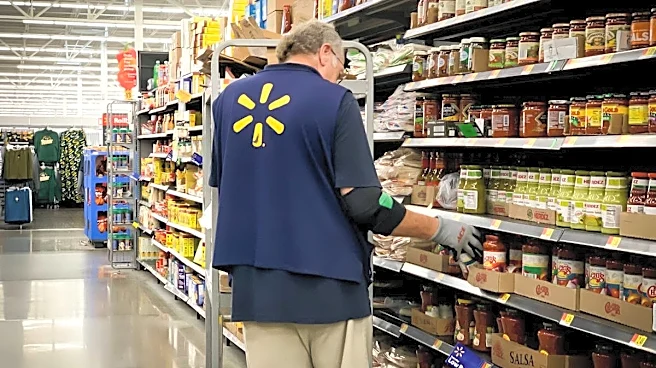
As major retailers like Walmart and Target begin to invest in price cuts, there may be a gradual easing of grocery prices. This could force other retailers to follow suit to remain competitive, potentially leading to a more significant reduction in prices. However, the impact of global factors such as climate change on agricultural yields and geopolitical tensions on supply chains could continue to influence food prices. Monitoring these developments will be crucial for understanding future trends in consumer prices and economic stability.