




What's Happening?
Woodside Energy and Mexico's state-owned petroleum company, Pemex, have signed a non-binding Memorandum of Understanding (MOU) to explore new deepwater hydrocarbon opportunities in the Gulf of Mexico. This agreement aims to expand their existing collaboration
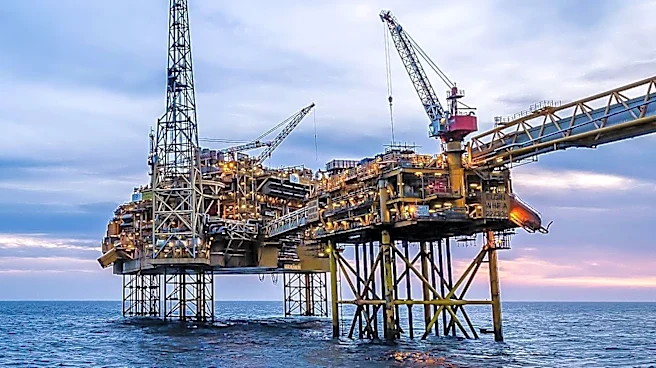
beyond the Trion oil project, which is currently 64% complete and targeting first oil by 2028. The MOU facilitates the mutual exchange of technical knowledge, experience, and industry best practices in the oil and gas sector. Pemex's CEO, Juan Carlos Carpio Fragoso, is also exploring new models for private investment to boost the state-owned oil company's operations. The Trion project, located approximately 180 kilometers off Mexico’s coastline and 30 kilometers south of the U.S.-Mexico maritime border, is set to be Mexico’s first ultra-deepwater development, with an estimated total capital investment of $7.2 billion.
Why It's Important?
This expanded partnership between Woodside and Pemex is significant for the U.S. energy sector due to its proximity to the U.S.-Mexico maritime border and the potential for increased oil and gas production in the Gulf of Mexico. The development of new deepwater projects could contribute to regional energy supply and stability, impacting U.S. energy markets and potentially influencing international oil prices. For U.S. companies operating in the Gulf, this collaboration could signal new opportunities for service providers, technology suppliers, and infrastructure development. The success of such ventures also sets a precedent for future cross-border energy collaborations, potentially fostering greater integration of North American energy resources. Conversely, increased production could also lead to competitive pressures for U.S. domestic producers, depending on market dynamics and export capabilities.
What's Next?
Following the signing of the MOU, Woodside and Pemex will proceed with analyzing potential prospects for hydrocarbon exploration and extraction in the deep waters of the Gulf of Mexico. This will involve a detailed assessment of geological data, technical feasibility, and economic viability. The companies will continue to exchange technical knowledge and best practices, which could lead to the identification of new joint ventures and investment opportunities. The progress of the Trion project, which is expected to achieve first oil by 2028, will serve as a crucial benchmark for the expanded partnership. Future steps will likely include further agreements and potential investment commitments based on the findings of their joint analysis, with a focus on leveraging private investment to enhance Pemex's operational capabilities.
Beyond the Headlines
The collaboration between Woodside and Pemex extends beyond immediate exploration and production, hinting at broader implications for energy policy and international relations in North America. The exchange of technical knowledge and industry best practices could lead to enhanced safety standards and environmental stewardship in deepwater operations, potentially influencing regulatory frameworks in both Mexico and the U.S. This partnership also underscores a growing trend of international energy companies seeking to leverage expertise and capital in regions with significant untapped resources, particularly as global energy demands evolve. The success of this model could encourage similar cross-border collaborations, fostering a more integrated and resilient North American energy landscape, while also raising questions about the long-term environmental impact of expanded deepwater drilling.