






What's Happening?
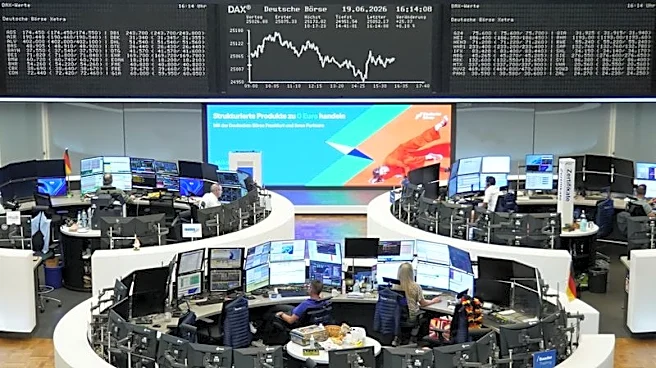
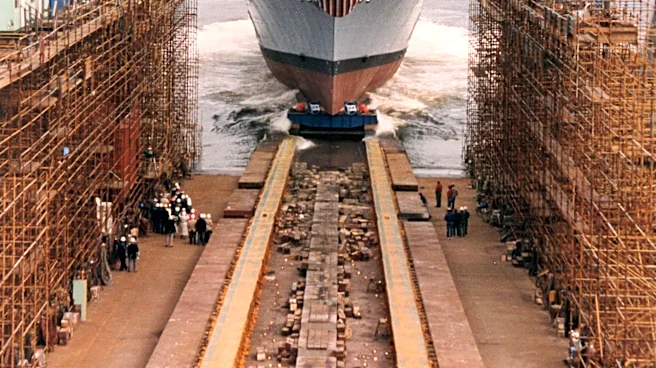
Germany has decided to cancel its F126 frigate project, a significant naval program that was expected to be worth over 12 billion euros. This decision has led to a notable decline in European defense stocks, particularly affecting companies like Rheinmetall,
which was anticipated to be the lead contractor. The cancellation is attributed to project delays, cost increases, and the risks associated with changing the prime contractor. Instead, Germany will procure eight smaller Meko A-200 frigates from German TKMS, which are expected to fulfill the German Navy's core mission of anti-submarine warfare and meet NATO obligations. This move has caused a ripple effect in the market, with shares of Rheinmetall, Hensoldt, and Renk experiencing significant drops.
Why It's Important?
The cancellation of the F126 project underscores the inherent unpredictability in defense procurement, which is heavily influenced by shifting government priorities. This decision highlights the political nature of defense spending, which can significantly impact market confidence and investor expectations. The move has raised concerns about the future of defense budgets in Europe, especially in light of NATO's increased spending targets. Investors are worried that promised budgets may not materialize, potentially constraining growth for defense companies. The decision also reflects a broader trend where governments may prioritize spending on advanced technologies like drones and air defense systems over traditional military hardware.
What's Next?
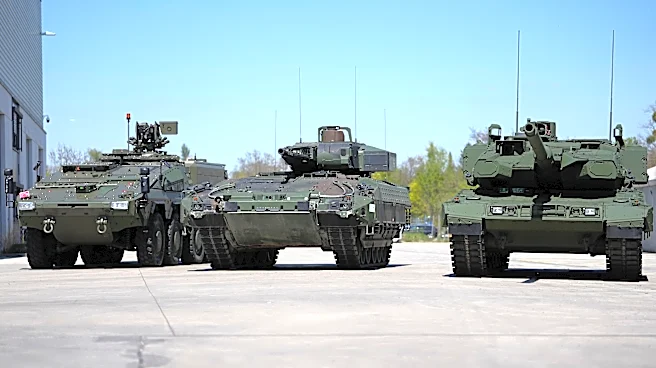
Germany's decision to opt for Meko A-200 frigates suggests a strategic shift towards more versatile and cost-effective naval solutions. This could influence other European nations to reassess their defense procurement strategies, potentially leading to a broader reevaluation of military spending priorities across the continent. Companies like Rheinmetall may need to adjust their business strategies to align with these changing priorities, possibly focusing more on land vehicles and ammunition, as well as exploring opportunities in emerging defense technologies. The market will be closely watching how Germany and other NATO countries balance their defense commitments with fiscal constraints.