






What's Happening?
Mexican poet, translator, and editor José Luis Rivas has been honored with the Bellas Artes Medal of Literature 2026, presented by the federal Secretariat of Culture and the National Institute of Fine Arts and Literature (INBAL). The ceremony took place
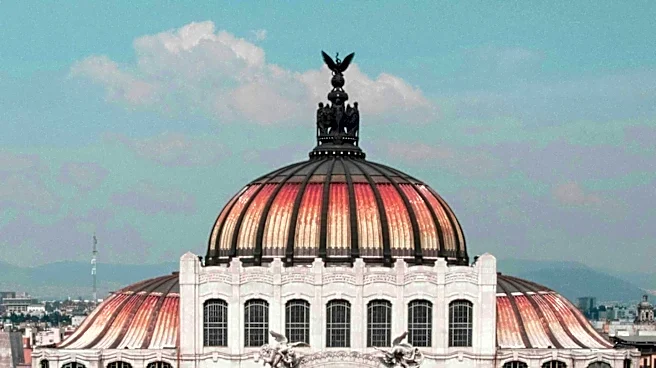
at the Palacio de Bellas Artes, where Rivas, born in Tuxpan in 1950, chose to recite one of his significant poems, 'Río,' instead of delivering a lengthy acceptance speech. His work is celebrated for transforming everyday language, landscapes, and memory into universal expressions, deeply rooted in the natural environment of his childhood, particularly the Pantepec River in Veracruz. The award recognizes his decades-long career exploring nature, popular language, and musicality in his poetry.
Why It's Important?
This recognition highlights the enduring value of literary arts and the profound impact of individual voices in shaping cultural narratives. Rivas's focus on local landscapes and personal memory, while achieving universal resonance, underscores the importance of regional identity in global literature. His work as a translator, bringing Antillean poets like Aimé Césaire, Saint-John Perse, and Derek Walcott to Spanish-speaking audiences, further enriches the literary landscape by fostering cross-cultural understanding. The award not only celebrates Rivas's contributions but also reinforces the role of institutions like INBAL in preserving and promoting literary heritage, inspiring new generations of writers and readers to engage with poetry that connects deeply with human experience and the natural world.
What's Next?
The awarding of the Bellas Artes Medal of Literature to José Luis Rivas is expected to bring renewed attention to his extensive body of work, potentially leading to increased readership and critical analysis of his poetry and translations. This recognition may also encourage further academic study of his unique approach to integrating natural landscapes and personal history into universal themes. For the broader literary community, such accolades often stimulate discussions about the criteria for literary excellence and the role of national identity in artistic expression. It could also inspire other poets to explore similar themes of nature, memory, and regional identity, contributing to a richer and more diverse literary output in Mexico and beyond.
Beyond the Headlines
Beyond the immediate recognition, Rivas's work delves into the profound connection between an individual and their environment, illustrating how childhood experiences and natural surroundings can serve as an inexhaustible source of creative inspiration. His philosophy, likening a poet to a 'peasant who makes silk dresses with worms,' speaks to the transformative power of art—taking humble, everyday elements and elevating them into something beautiful and enduring. This perspective challenges the notion that profound art must always stem from grand, abstract concepts, instead emphasizing the richness found in the familiar and the deeply personal. His dedication to translation also highlights the ethical dimension of literature, bridging cultural divides and making diverse voices accessible, thereby fostering a more interconnected global literary consciousness.