









What's Happening?
The United States is implementing a new civil aircraft exemption, identified as 9903.96.01, for certain goods originating from the United Kingdom. This exemption, effective for entries on or after June 30, 2025, allows for a 0 percent additional duty
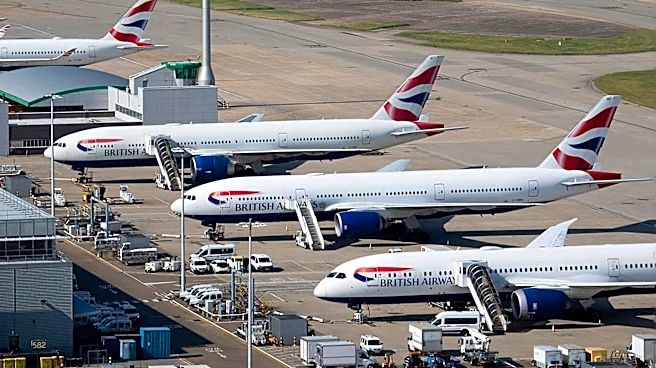
on civil aircraft, their engines, parts, components, and ground flight simulators. To qualify, the goods must be of UK origin (country code GB) and classified under specific subheadings enumerated in subdivision (a) of U.S. note 35 to the Harmonized Tariff Schedule of the United States (HTSUS). This is a claim-gated exemption, meaning importers must actively claim it on their entry, and it does not apply automatically. The legal authority for this exemption is the US-UK Economic Prosperity Deal aerospace annex, and there is no announced end date for this provision.
Why It's Important?
This civil aircraft exemption is significant for U.S. businesses involved in the aerospace industry, particularly those importing components or complete civil aircraft from the United Kingdom. By eliminating additional duties, it reduces the cost of imports, potentially leading to more competitive pricing for U.S. manufacturers and consumers. This could stimulate trade between the U.S. and the UK in the aerospace sector, fostering economic growth and strengthening supply chains. U.S. companies that rely on UK-made aircraft parts or simulators stand to gain from lower operational costs, which could be passed on to customers or reinvested into research and development. Conversely, businesses that produce similar goods domestically might face increased competition from more affordably priced UK imports. The exemption also underscores the ongoing economic partnership between the U.S. and the UK, particularly in strategic industries like aerospace, and reflects efforts to streamline trade post-Brexit.
What's Next?
Importers of civil aircraft and related components from the UK will need to ensure their goods meet the specific criteria for the 9903.96.01 exemption. This includes verifying the UK origin of the products and confirming that their classification falls within the enumerated subheadings in U.S. note 35(a) of the HTSUS. They must also correctly claim the exemption on their entry forms and maintain supporting records. Customs and Border Protection (CBP) will be responsible for enforcing these requirements. Businesses should consult with their brokers and refer to the current HTSUS and any CSMS guidance from CBP for precise filing instructions. The aerospace industry will likely see an adjustment in import strategies as companies leverage this new duty-free status. The ongoing nature of the exemption, with no announced end date, suggests a long-term commitment to facilitating trade in this sector between the two nations.
Beyond the Headlines
The implementation of this civil aircraft exemption extends beyond immediate economic benefits, touching upon deeper strategic and geopolitical implications. It reinforces the U.S.-UK economic alliance, particularly in a high-tech and strategically important sector like aerospace. This move can be seen as part of a broader effort to strengthen economic ties with key allies, potentially diversifying supply chains and reducing reliance on other regions. Ethically, it highlights the role of trade agreements in shaping international relationships and supporting specific industries. Culturally, it could foster greater collaboration and exchange within the aerospace engineering and manufacturing communities of both countries. The long-term shift could involve a more integrated U.S.-UK aerospace market, potentially influencing global standards and innovation in civil aviation technology, and serving as a model for future bilateral trade agreements in other advanced manufacturing sectors.