
What's Happening?
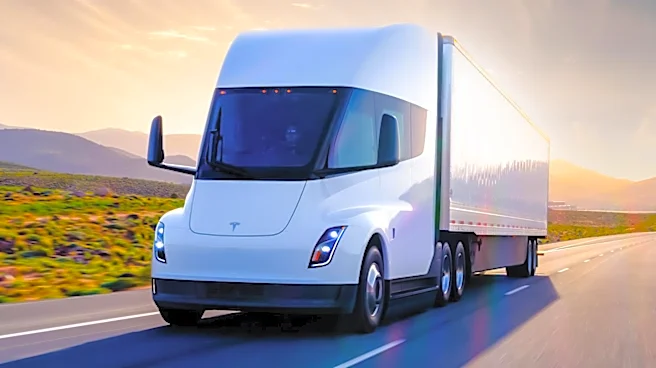
A new study suggests that self-driving trucks could significantly reduce freight costs in the United States by approximately 35%. This reduction is primarily due to the elimination of driver-related expenses,
such as wages and benefits, and the ability for autonomous trucks to operate continuously without the need for rest. The study, conducted by researchers at the University of Illinois Urbana-Champaign, analyzed two decades of federal freight records to project the economic impact of autonomous trucking. The findings indicate that while some states and industries may benefit more than others, the overall effect could reshape the economic landscape of the U.S. by altering trade patterns and highway usage.
Why It's Important?
The introduction of self-driving trucks could have profound implications for the U.S. economy. By lowering freight costs, businesses could see reduced expenses, potentially leading to lower consumer prices and increased competitiveness. However, the benefits are not evenly distributed, with certain regions and industries poised to gain more than others. This shift could lead to changes in where businesses choose to operate and how goods are transported across the country. Additionally, the transition to autonomous trucking poses challenges for the labor market, particularly for truck drivers and related professions, who may face job displacement.
What's Next?
As the technology for self-driving trucks continues to develop, stakeholders will need to address the potential economic and social impacts. Transportation agencies may need to adjust infrastructure planning to accommodate changes in traffic patterns, while policymakers could consider measures to support workers affected by automation. The timeline for widespread adoption remains uncertain, but the study provides a framework for understanding the potential changes and preparing for a future where autonomous trucks play a significant role in the freight industry.