

What's Happening?
Patrick Wendell, co-founder of Databricks, has publicly stated that his company has found only one 'neocloud' provider with sufficiently robust isolation for its customer workloads. While Wendell did not explicitly name the provider, Nebius has indicated
that Databricks selected its AI Cloud after a thorough evaluation. This statement from Databricks suggests a significant concern within the enterprise sector regarding the security and tenant isolation capabilities of emerging cloud providers. Wendell further criticized other 'top' neoclouds for lacking a fundamental understanding of tenant isolation mechanisms and physical data center security practices. This development highlights that security is becoming a primary filter for enterprise clients when choosing AI cloud infrastructure, moving beyond just access to Nvidia chips and raw compute power.
Why It's Important?
This revelation from a prominent figure like Patrick Wendell could significantly impact the competitive landscape of the AI cloud market, particularly for providers like CoreWeave and IREN. If enterprises prioritize robust isolation and security as a critical factor, providers perceived as lacking in these areas could struggle to attract high-value clients. For the U.S. business sector, this emphasizes a growing maturity in how companies evaluate cloud services, shifting from purely performance-driven decisions to a more holistic assessment that includes security and data integrity. Companies that can demonstrate superior isolation and physical data center security will gain a substantial advantage, potentially leading to a consolidation of enterprise clients around a few trusted providers. This also signals a potential shift in investment priorities for cloud providers, with increased focus on security infrastructure and protocols.
What's Next?
The emphasis on security and isolation by Databricks is likely to prompt other enterprise clients to conduct more rigorous security evaluations of their cloud providers. This could lead to increased scrutiny for neoclouds like CoreWeave and IREN, compelling them to enhance their security offerings and transparency regarding their isolation mechanisms. Cloud providers that can quickly adapt and demonstrate strong security postures will likely gain market share. Conversely, those that fail to address these concerns may find it challenging to secure enterprise contracts. The market may see a greater differentiation among AI cloud providers based on their security credentials, potentially leading to new industry standards or certifications for tenant isolation and data center security. Nvidia, which has invested in multiple neoclouds including CoreWeave and Nebius, may also see its portfolio companies facing varying degrees of success based on their security capabilities.
Beyond the Headlines
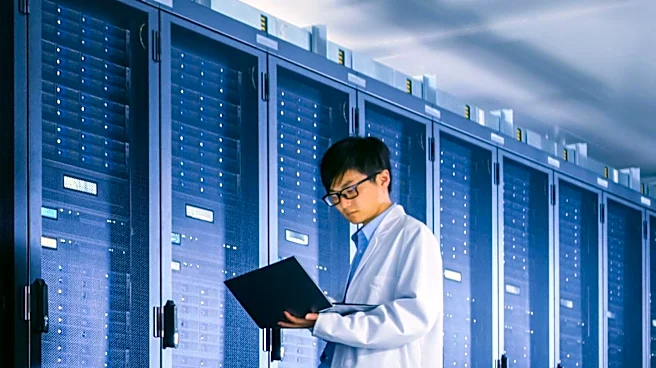
The discussion around 'robust enough isolation' delves into the fundamental trust enterprises place in third-party cloud infrastructure. It highlights the complex challenges of multi-tenancy environments, where the data and operations of different clients must be kept completely separate and secure. This issue extends beyond technical implementation to broader ethical and legal implications concerning data sovereignty, compliance, and liability in the event of a breach. The physical security of data centers, often overlooked in discussions about cloud security, is also brought to the forefront. This development could spur innovation in hardware-level isolation technologies and more stringent auditing processes for cloud providers, ultimately raising the bar for security across the entire AI ecosystem. It also underscores the importance of due diligence for companies entrusting their sensitive workloads to external providers.