








What's Happening?
Paul Skenes, a pitcher for the Pittsburgh Pirates, recently traveled to Japan to observe the training and recovery routines of Los Angeles Dodgers stars Shohei Ohtani and Yoshinobu Yamamoto. Skenes, who experienced a drop in his average four-seam fastball
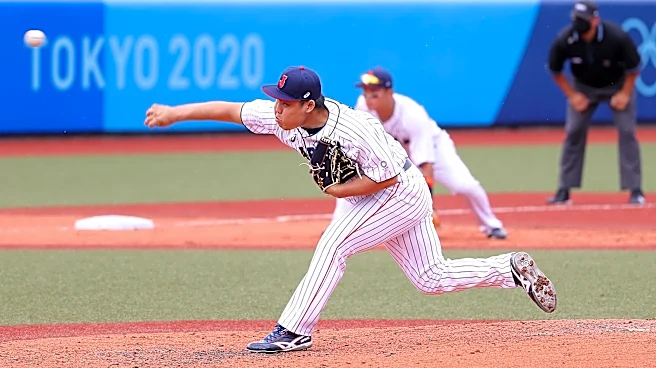
velocity from 98.8 mph in 2024 to 96.8 mph in 2026, is seeking to regain his dominant form for the 2027 season. He specifically focused on Ohtani's sleep and recovery protocols, including his use of custom bedding from Japanese company Nishikawa, which Ohtani credits for his ability to manage the physical demands of a 162-game season. Skenes underwent a full-body assessment at the Nishikawa store in Tokyo and had custom bedding made. Additionally, Skenes expressed admiration for Yamamoto's pitching techniques, particularly his ability to create synergistic effects with different pitches and his meticulous routine between starts. Skenes noted Yamamoto's efficient delivery and minimal joint stress despite generating high fastball velocities.
Why It's Important?
Skenes' proactive approach highlights a growing trend among elite athletes to seek out innovative training and recovery methods globally to extend their careers and optimize performance. His focus on sleep and recovery, inspired by Ohtani, underscores the increasing recognition of these factors as critical components of athletic success, moving beyond traditional strength and conditioning. For the Pittsburgh Pirates, Skenes' efforts could translate into improved on-field performance, potentially impacting the team's competitiveness in upcoming seasons. His struggles in 2026, following two strong seasons, make this pursuit of improvement particularly significant for his career trajectory. The adoption of techniques from Japanese baseball, known for its rigorous and often unique approaches to player development and maintenance, could influence how other MLB players and organizations view and implement their own training regimens.
What's Next?
Following his trip to Japan, Paul Skenes is expected to integrate the learned techniques, particularly Ohtani's sleep and recovery protocols and Yamamoto's pitching philosophies, into his offseason training and preparation for the 2027 MLB season. The effectiveness of these new methods will be closely watched, especially regarding his fastball velocity and overall pitching performance. If Skenes successfully regains his dominant form, it could lead to increased interest across MLB in adopting similar cross-cultural training exchanges and a greater emphasis on personalized recovery strategies. His performance in the upcoming season will serve as a practical test case for the efficacy of these specialized approaches, potentially influencing future player development strategies within the league.
Beyond the Headlines
Skenes' journey to Japan reflects a broader cultural exchange in professional sports, where athletes are increasingly looking beyond national borders for competitive advantages. This cross-pollination of ideas, particularly from Japanese baseball which emphasizes precision, discipline, and holistic player care, could lead to a more globalized approach to athlete development in the U.S. It also underscores the evolving understanding of athletic longevity, moving beyond sheer physical training to incorporate sophisticated recovery science and mental preparation. The emphasis on custom bedding and meticulous routines highlights a shift towards highly individualized approaches to athlete well-being, suggesting that future advancements in sports performance may come from integrating diverse global practices and personalized scientific insights.