



What's Happening?
American minimalism is undergoing a significant evolution, shifting from a focus on mere scarcity and removal of objects to a deeper appreciation for items imbued with intention, history, and craftsmanship. For decades, Western minimalism emphasized clean
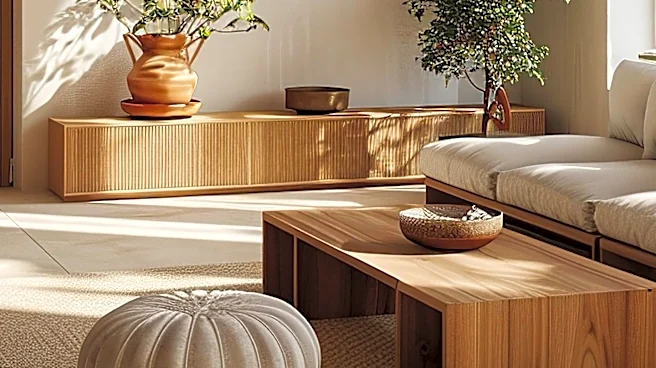
lines and neutral palettes, often drawing from Scandinavian design and a superficial understanding of Japanese wabi-sabi. However, a growing segment of discerning American consumers and tastemakers now finds this approach hollow, realizing that simply removing objects does not automatically confer meaning. Instead, they are seeking 'denser things'—objects and garments so rich in history and craft that a single piece can hold the significance of many. This pursuit of profound meaning is leading American minimalists to explore Middle Eastern artisanal traditions, which have historically prioritized such depth and intentionality in their creations. This shift represents a move away from an aesthetic of absence towards one of presence, where each chosen item carries substantial cultural and historical weight.
Why It's Important?
This evolution in American minimalism signifies a broader cultural shift away from mass-produced, disposable goods towards a more conscious and sustainable consumption model. For U.S. consumers, it means a re-evaluation of value, prioritizing longevity, craftsmanship, and narrative over fleeting trends and sheer quantity. This trend could significantly impact the American design and retail industries, potentially increasing demand for ethically sourced, handcrafted goods and fostering greater appreciation for global artisanal traditions. Businesses that adapt to this demand for 'dense' and meaningful objects, particularly those with Middle Eastern influences, stand to gain. Conversely, companies relying on the 'hollow' aesthetic of traditional Western minimalism may find their market shrinking. The emphasis on objects made to last and be passed down through generations also challenges the prevailing consumer culture of rapid obsolescence, promoting a more enduring relationship between individuals and their possessions. This movement also highlights a growing cross-cultural exchange, where American aesthetic preferences are being enriched by global artisanal practices.
What's Next?
The trajectory suggests a continued integration of Middle Eastern craft into American minimalist aesthetics, moving beyond mere exoticism to a genuine recognition of inherent integrity in these traditions. We can anticipate an increased demand for authentic, handcrafted items from regions like Fez, Damascus, and Sana'a, as American consumers seek out textiles, ceramics, and metalwork that embody 'baraka'—a sense of blessing and spiritual power. This will likely lead to more collaborations between American designers and Middle Eastern artisans, as well as a rise in specialized boutiques and online platforms catering to this niche. Educational initiatives focusing on the history and techniques of Middle Eastern craftsmanship may also emerge to inform and engage this new wave of collectors. Furthermore, this trend could influence broader discussions around ethical production, cultural appropriation, and the true cost of goods, pushing American industries towards more responsible and culturally sensitive practices. The market for 'unmarked Middle Eastern craftsmanship' is poised to become a significant status signal, indicating a shift in what constitutes luxury and discernment.
Beyond the Headlines
The deeper implications of this shift extend to challenging the very definition of luxury and status in American society. Traditionally, luxury has often been associated with brand recognition, high price points, and exclusivity. However, the new minimalist paradigm suggests that true luxury lies in the intrinsic value of an object—its story, its craftsmanship, and its ability to connect the owner to a rich cultural heritage. This movement also subtly critiques the rapid consumption cycles inherent in modern capitalism, advocating for a more thoughtful and deliberate approach to acquiring possessions. Ethically, it raises questions about fair trade practices and ensuring that the increased demand for Middle Eastern crafts directly benefits the artisans and their communities, rather than being exploited by intermediaries. Culturally, it fosters a deeper appreciation for non-Western aesthetic philosophies and artisanal knowledge, potentially leading to a more inclusive and globally aware design landscape in the U.S. This evolution is not just about interior design or fashion; it reflects a broader societal yearning for authenticity, meaning, and connection in an increasingly commodified world.