





What's Happening?
Meta is reevaluating its 2030 net-zero emissions timeline and near-term intensity targets due to a significant increase in its carbon footprint. The company's net carbon footprint rose by 45% in the last year, reaching 11.9 million metric tons of carbon dioxide
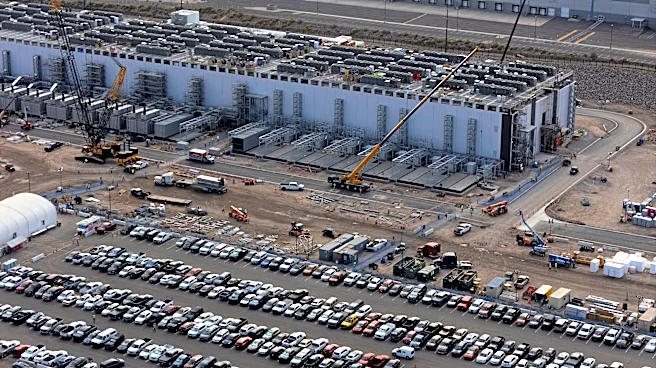
equivalent (mtCO2e), with its location-based emissions inventory nearly doubling that at 21.7 million mtCO2e. This surge is primarily attributed to the rapid expansion of AI data centers, which has outpaced expectations. Meta's Vice President of Data Centers, Rachel Peterson, and Global Head of Net Zero and Sustainability, Blair Swedeen, stated that interconnection queues, permitting, and transmission buildout have lagged behind the demand for AI infrastructure. The company has not yet provided a new target date but plans to share the outcome of its reevaluation later. This move makes Meta the only hyperscaler to announce a reevaluation of its 2030 commitment, despite other major tech companies like Amazon, Google, and Microsoft also reporting double-digit increases in their emissions.
Why It's Important?
Meta's decision to reevaluate its net-zero timeline highlights the growing environmental challenges faced by the technology sector, particularly with the rapid expansion of artificial intelligence. The increased reliance on natural gas to circumvent grid connection delays in the U.S. indicates a potential shift in energy sourcing strategies for large data centers, which could have broader implications for energy policy and renewable energy investments. This development could influence other hyperscalers to reassess their own sustainability commitments, potentially slowing the overall progress towards corporate climate goals. The company's previous departure from the RE100 climate initiative due to investments in new gas power, such as the deal with Entergy for ten natural gas plants in Louisiana, underscores the tension between rapid technological growth and environmental sustainability. This situation also brings into focus the complexities of achieving net-zero targets when infrastructure development struggles to keep pace with technological demand, impacting both environmental advocates and energy providers.
What's Next?
Meta plans to announce the outcome of its reevaluation of net-zero timelines, sequencing, and interim milestones at a later date. This announcement will likely detail revised targets and strategies for reducing emissions, potentially including new approaches to energy procurement and infrastructure development. The company may continue to deploy on-site gas where utilities cannot deliver sufficient power, and it plans to purchase low-methane certificates to offset some emissions. Stakeholders, including environmental organizations, investors, and other tech companies, will closely monitor Meta's revised commitments and their potential impact on broader industry sustainability efforts. The ongoing challenges with grid connection delays and permitting could prompt further discussions and collaborations between tech giants, utility providers, and government bodies to accelerate the development of renewable energy infrastructure capable of supporting the growing demands of AI.
Beyond the Headlines
The reevaluation of Meta's net-zero timeline points to a deeper systemic challenge in balancing rapid technological advancement with environmental responsibility. The immense energy demands of AI infrastructure are creating a significant hurdle for companies committed to sustainability, raising questions about the feasibility of current net-zero targets across the tech industry. This situation could trigger a broader re-examination of how energy-intensive technologies are developed and deployed, potentially leading to innovations in energy efficiency for AI or increased investment in advanced, reliable clean energy sources like nuclear power, as evidenced by Meta's recent nuclear agreements. The ethical implications of prioritizing technological growth over environmental commitments will likely become a more prominent discussion, influencing corporate social responsibility frameworks and investor expectations regarding sustainable practices in the digital age. This also highlights the critical need for robust and adaptable energy grids that can support future technological demands without compromising climate goals.