




What's Happening?
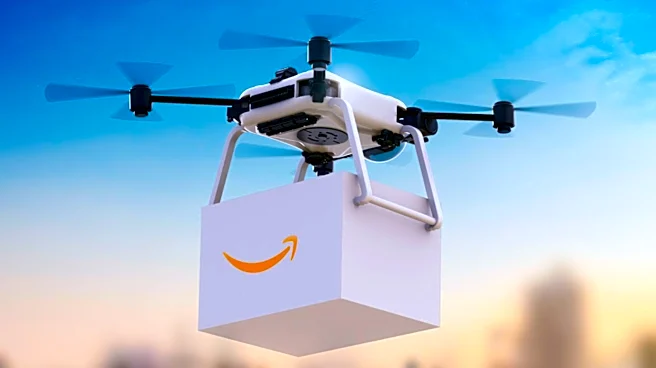
Amazon has updated its Prime Air drone delivery guide, now stating that most drone orders will arrive within 90 minutes of checkout. This is an extension from the previous claim in August, which cited a typical delivery time of approximately 60 minutes.
The updated guide, published on November 19, 2026, on Amazon's corporate news site, also provides additional details on the drone's operation, including its 13-foot hover height for package release, weather limitations, and the functionality of the Flight Monitor Station used by Amazon employees. The service is designed for products weighing 5 pounds or less that fit into a large shoebox, covering over 60% of frequently purchased items. Each delivery site is estimated to cover approximately 175 square miles, serving multiple surrounding communities. The guide emphasizes the convenience for suburban and semi-rural areas, framing drone deliveries as a solution for errands like medicine or missing dinner ingredients.
Why It's Important?
This update from Amazon is significant for several reasons. The extended delivery window from 60 to 90 minutes could indicate a more realistic operational target as the service expands, or it might reflect challenges in maintaining faster speeds across a broader geographical footprint. For consumers, this means a slightly longer wait time for drone deliveries, though still considerably faster than standard shipping. For brands and marketers, the eligibility criteria (5 pounds or less, shoebox-sized) highlight specific product categories that benefit most from this delivery method, potentially influencing product development and marketing strategies. The competition in the drone delivery space is also intensifying, with Walmart announcing plans to expand its Zipline drone delivery service. Amazon's continued investment and adjustments to Prime Air demonstrate the company's commitment to this delivery model, which could reshape last-mile logistics and consumer expectations for speed and convenience, particularly in areas less served by traditional retail.
What's Next?
Amazon aims to expand its drone operations to nearly 500 U.S. cities and towns by the end of 2026. The company will likely continue to refine its Prime Air service, potentially adjusting delivery times, expanding product eligibility, and optimizing operational efficiency as it scales. The updated guide does not specify delivery fees, active drone site counts, or U.S. locations, suggesting that more detailed information may be released as the expansion progresses. The competitive landscape with companies like Walmart and Zipline will likely drive further innovation and potentially more aggressive delivery promises or service expansions. Consumers can expect to see drone delivery options become available in more suburban and semi-rural areas, influencing their shopping habits for small, essential items. Future updates from Amazon will be crucial in understanding the true cost-effectiveness and widespread adoption of drone delivery.
Beyond the Headlines
The shift in Amazon's stated delivery window for Prime Air drones, while seemingly minor, could reflect deeper operational complexities and the inherent challenges of scaling advanced logistics technologies. The emphasis on privacy, noise reduction, and environmental benefits in the guide points to Amazon's awareness of public concerns and its strategy to address them proactively. The absence of a live video feed for flight monitors, as detailed in the guide, highlights a deliberate design choice to balance operational oversight with privacy considerations. This development also underscores a broader trend in retail towards hyper-localized and on-demand delivery, pushing the boundaries of traditional supply chains. The long-term implications could include a significant reduction in road traffic for small package deliveries, a shift in consumer purchasing patterns towards immediate gratification for certain goods, and the establishment of new regulatory frameworks for drone operations in urban and suburban environments. The success of Prime Air will not only depend on technological advancements but also on public acceptance and regulatory adaptability.