




What's Happening?
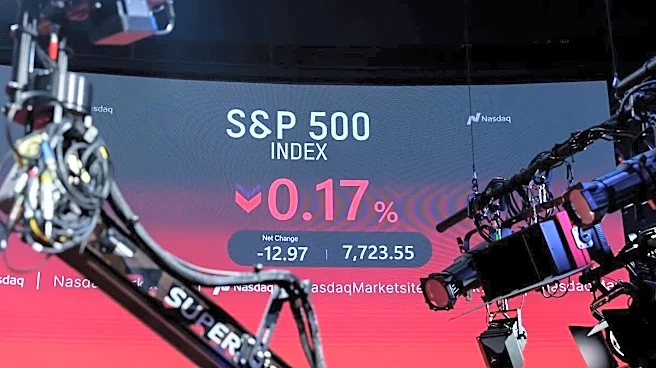
Following the Federal Reserve's recent interest rate hike, U.S. financial stocks have experienced varied impacts, underscoring the diverse business models within the banking sector. While the broader S&P 500 has seen a slight increase, the State Street
Financial Select Sector ETF (XLF) has declined, indicating sensitivity to the Fed's tightening cycle. The effects of higher rates are not uniform across banks like Wells Fargo, Capital One, Goldman Sachs, and BNY. Wells Fargo, being a traditional bank with significant deposit and loan operations, is directly exposed to rate changes, potentially benefiting from wider net interest margins early in a hiking cycle. Capital One, heavily reliant on credit cards, faces risks if prolonged tightening weakens consumer spending. Goldman Sachs, focused on investment banking and trading, is less directly sensitive to rates, with its performance tied more to capital markets activity. BNY, a custodian bank with fee-based revenue, also has limited direct rate sensitivity, though its institutional depositors are quicker to demand higher rates.
Why It's Important?
The Federal Reserve's interest rate decisions have profound implications for the U.S. economy and financial markets. For the banking sector, these hikes can initially boost profitability for traditional lenders like Wells Fargo by widening net interest margins, as loan yields may rise faster than deposit costs. However, a sustained tightening cycle could eventually dampen loan demand and increase credit risk, particularly for consumer-focused institutions like Capital One. The varying sensitivities highlight the importance of diversification within financial portfolios, as different bank models respond uniquely to economic shifts. The shape of the yield curve, which influences banks' ability to profit from lending, also plays a critical role. A flatter or inverted curve can squeeze margins, impacting overall bank profitability and potentially leading to tighter lending conditions for businesses and consumers across the U.S.
What's Next?
As the Fed continues its tightening cycle, the focus will shift to how quickly deposit costs rise and whether higher borrowing costs begin to impact the broader economy and credit quality. Analysts will closely monitor indicators such as credit card delinquencies for Capital One and capital markets activity for Goldman Sachs. For Wells Fargo, the benefit of wider margins is expected to become more apparent in upcoming quarterly results, but the bank also faces greater credit exposure if the economy slows. BNY's fee-heavy model is anticipated to provide some insulation from direct rate sensitivity and credit risk. The ongoing evolution of interest rates will continue to shape the strategies and profitability of these diverse financial institutions, influencing their lending practices, investment decisions, and overall contribution to the U.S. economy.
Beyond the Headlines
The nuanced impact of Fed rate hikes on different bank models reveals the intricate interconnectedness of monetary policy and the financial system. Beyond immediate profitability, these rate changes influence the availability and cost of credit for businesses and individuals, affecting investment, consumption, and economic growth. The differing responses of banks also underscore the structural changes within the financial industry, where specialized institutions like Goldman Sachs and BNY operate with distinct risk profiles compared to traditional commercial banks. This complexity necessitates a sophisticated understanding of financial markets for investors and policymakers alike. Furthermore, the potential for a prolonged tightening cycle to pressure consumers and increase credit stress could have broader societal implications, affecting household budgets and small business viability, making the Fed's future actions a critical determinant of economic stability.