







What's Happening?
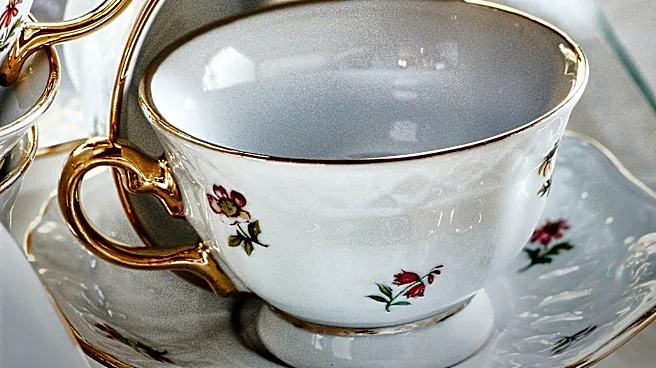
Vintage floral dishware, once a staple in many households, is experiencing a resurgence in popularity. Patterns such as Franciscan's Desert Rose, Hutschenreuther's Richelieu and Mirabell, and Georges Briard's Victorian Garden are being sought after by
collectors and enthusiasts. These patterns, known for their whimsical and painterly designs, are being rediscovered in antique stores, estate sales, and thrift shops. Collectors like Katherine Medlin and Kate Pechinka emphasize the charm and historical value of these pieces, which were originally produced from the early to mid-1900s. The renewed interest is partly due to the nostalgic appeal and the unique aesthetic these dishware patterns bring to modern table settings.
Why It's Important?
The revival of vintage floral dishware highlights a broader trend of nostalgia and appreciation for historical craftsmanship in home decor. This resurgence not only supports antique dealers and thrift stores but also encourages sustainable practices by promoting the reuse and repurposing of older items. For collectors, these pieces offer a tangible connection to the past, while for designers, they provide a unique opportunity to blend vintage charm with contemporary styles. The trend also reflects a growing interest in personalized and eclectic home environments, moving away from mass-produced, uniform designs.
What's Next?
As interest in vintage floral dishware continues to grow, it is likely that more collectors and designers will seek out these pieces, potentially driving up their value. This trend may also inspire contemporary manufacturers to create new lines that mimic the aesthetic of these classic patterns. Additionally, the integration of vintage dishware into modern decor could lead to more creative and diverse table settings, encouraging a mix-and-match approach that combines different eras and styles.
Beyond the Headlines
The resurgence of vintage floral dishware also raises questions about cultural heritage and the preservation of traditional design techniques. As these items become more popular, there may be increased efforts to document and preserve the history of the companies and artisans who originally produced them. This could lead to a greater appreciation for the artistry involved in creating these patterns and a deeper understanding of their place in cultural history.