






What's Happening?
A recent report from Edmunds highlights a significant trend in the U.S. automotive market: a record number of car buyers are trading in vehicles with negative equity. In the second quarter of 2026, the average negative equity on trade-ins reached $6,884,
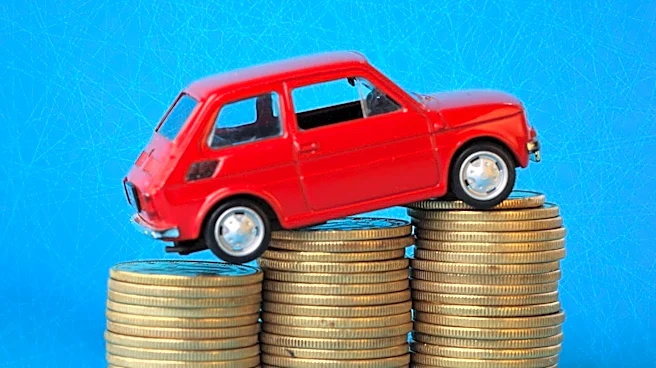
marking the highest for a second quarter on record. This situation arises as new car prices average close to $50,000, pushing more buyers into deeper debt to finance vehicle purchases. Notably, nearly 30% of recent new car buyers were underwater on loans for their trade-ins, meaning they owed more on their old cars than they were worth. The Chevrolet Silverado 1500, Ford F-150, and Ram 1500 are among the top vehicles with the highest average negative equity. Edmunds' head of insights, Jessica Caldwell, noted that consumers are incurring more debt when trading in vehicles that are underwater, exacerbated by elevated interest rates.
Why It's Important?
This development is significant as it reflects broader economic challenges facing U.S. consumers, particularly in the automotive sector. The trend of negative equity in vehicle trade-ins indicates that many buyers are struggling to keep up with rising car prices and interest rates. This situation can lead to a 'costly snowball effect' where consumers roll over their negative equity into new loans, increasing their financial burden. The reliance on longer loan terms to manage monthly payments can result in higher total interest charges over time. This trend could impact the automotive industry by affecting sales dynamics and consumer purchasing power, potentially leading to shifts in market strategies by car manufacturers and dealers.
What's Next?
As the issue of negative equity persists, it is likely that consumers will continue to face financial challenges when purchasing new vehicles. Car manufacturers and dealers may need to adjust their strategies to accommodate buyers' financial constraints, possibly by offering more competitive financing options or incentives. Additionally, policymakers and financial institutions might explore measures to address the underlying causes of negative equity, such as high vehicle prices and interest rates. The ongoing economic conditions will play a crucial role in shaping the future of the automotive market and consumer behavior.