








What's Happening?
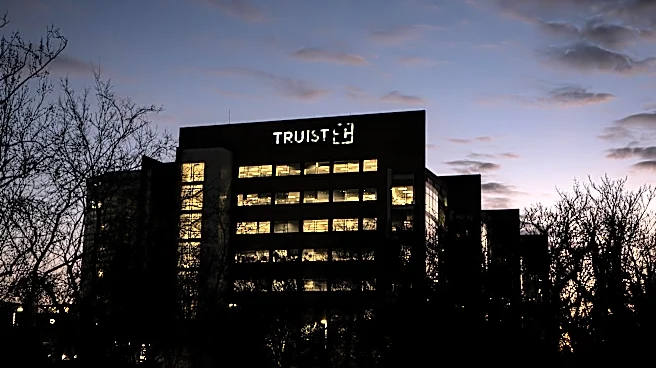
Truist Financial Corporation has announced the results of its 2026 annual stress test, conducted under the Dodd-Frank Act regulations by the Federal Reserve and the Federal Deposit Insurance Corporation (FDIC). The results highlight Truist's robust capital
position and effective risk management strategies. The stress test is a regulatory requirement designed to ensure that financial institutions have sufficient capital to withstand economic downturns. Truist's results demonstrate the benefits of its diverse business operations and disciplined risk management culture. The company, headquartered in Charlotte, North Carolina, is a top-10 commercial bank in the U.S. with total assets of $549 billion as of March 31, 2026. The stress test results are available on Truist's investor relations website.
Why It's Important?
The release of the stress test results is significant as it reassures stakeholders about Truist's financial health and stability. This is crucial for maintaining investor confidence and ensuring the bank's ability to continue serving its clients effectively. The strong capital position allows Truist to generate sustainable shareholder returns and fulfill its mission of building better lives and communities. The results also reflect the bank's preparedness to handle potential economic challenges, which is vital for the broader financial system's stability. As a major player in the U.S. banking sector, Truist's performance can influence market perceptions and investor sentiment across the industry.
What's Next?
Truist will continue to operate under its current stress capital buffer requirement of 2.5 percent, as announced by the Federal Reserve, until September 30, 2027. This requirement ensures that the bank maintains a sufficient capital cushion to absorb potential losses. Moving forward, Truist is expected to focus on leveraging its strong capital position to expand its market share and enhance its service offerings. The bank may also explore strategic initiatives to further strengthen its risk management practices and adapt to evolving regulatory requirements. Stakeholders will likely monitor Truist's performance closely, particularly in light of any changes in the economic environment or regulatory landscape.