





What's Happening?
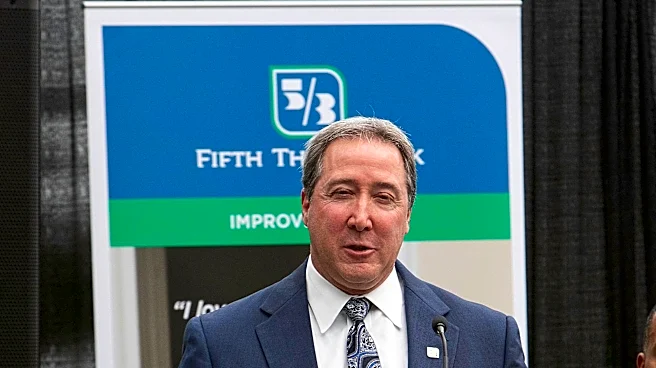
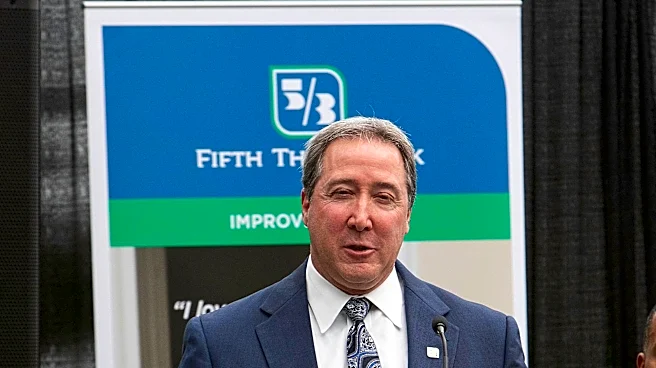
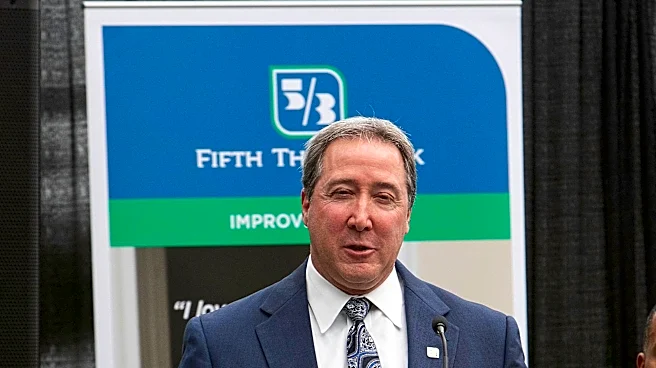
Fifth Third Bancorp (FITB), a bank holding company with a market capitalization of $47.9 billion, has garnered a 'Strong Buy' consensus rating from Wall Street analysts. This rating is based on an assessment of 23 analysts, with 18 issuing 'Strong Buy' recommendations,
one a 'Moderate Buy,' and four 'Holds.' The company provides a wide array of financial products and services across the United States through its Commercial Banking, Consumer and Small Business Banking, and Wealth and Asset Management segments. These services include commercial lending, consumer banking, mortgage and credit solutions, wealth management, investment advisory, and insurance services. Fifth Third Bancorp's stock performance has outpaced the broader market, with a 24.7% increase over the past 52 weeks, compared to the S&P 500 Index's 9.8% return. Year-to-date, the stock is up 13.3%, surpassing the S&P 500's 7.8% gain. The bank recently reported strong Q3 2026 adjusted EPS of $1.13, exceeding analyst estimates and showing growth from previous quarters, supported by credit quality and expense control.
Why It's Important?
The 'Strong Buy' consensus rating for Fifth Third Bancorp signals a positive outlook from financial experts, which can influence investor confidence and potentially drive further stock appreciation. This is particularly significant in the banking sector, where analyst ratings often guide investment decisions. The company's robust performance, outperforming both the S&P 500 Index and the State Street Financial Select Sector SPDR ETF (XLF), suggests strong operational efficiency and strategic positioning within the competitive U.S. financial landscape. The reported Q3 2026 adjusted EPS beat, coupled with effective credit quality management and expense control, indicates a healthy financial foundation. This performance is crucial for stakeholders, including shareholders, as it reflects the bank's ability to generate profits and manage risks effectively. The projected growth in adjusted EPS for the fiscal year ending December 2026 further underscores the potential for continued financial strength, making Fifth Third Bancorp an attractive prospect for investors seeking stability and growth in the banking industry.
What's Next?
Analysts anticipate Fifth Third Bancorp's adjusted EPS to grow by 15.7% year-over-year to $4.20 for the fiscal year ending December 2026. The bank has also provided projections for Q4, expecting noninterest expenses to decline by 2% to 3% from Q3's $1.82 billion (excluding certain items). Net interest income is projected to grow by 2.5% to 3.5% from $2.28 billion, with the successful completion of the Comerica systems conversion and strong client and banker retention. These forward-looking statements suggest a continued focus on operational efficiency and strategic integration. Investors will closely monitor these metrics to assess the bank's ability to meet its financial targets and maintain its growth trajectory. The sustained positive analyst sentiment, with an increase in 'Strong Buy' ratings compared to three months prior, indicates ongoing confidence in the bank's future performance and strategic initiatives.
Beyond the Headlines
The consistent outperformance of Fifth Third Bancorp's stock against broader market indices highlights a potential shift in investor preference towards well-managed regional banks with diversified service offerings. The bank's ability to beat consensus estimates in three out of the last four quarters, despite a mixed earnings surprise history, suggests a resilient business model capable of navigating economic fluctuations. The emphasis on credit quality and expense control, as evidenced by the falling provision for credit losses and below-forecast noninterest expenses, points to a disciplined approach to financial management. This operational prudence is vital in the banking sector, where risk management directly impacts profitability and stability. The successful integration of the Comerica systems conversion, with strong client and banker retention, also indicates effective merger and acquisition strategies, which are critical for growth in a consolidating industry. This could set a precedent for other regional banks looking to expand their market share and service capabilities.