







What's Happening?
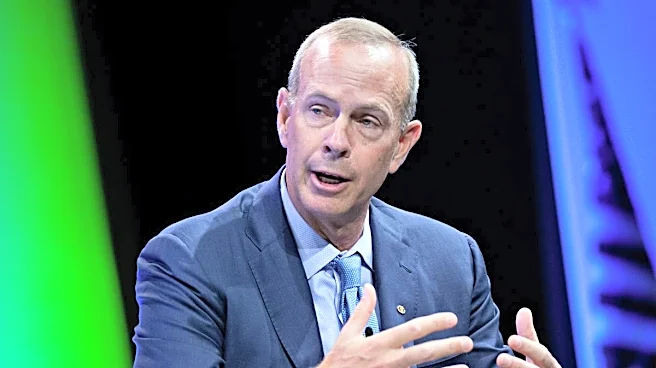
Sainsbury's CEO Simon Roberts has reported that grocery inflation has remained lower than anticipated, despite ongoing cost pressures in the food supply chain. During the supermarket's first-quarter trading update, Roberts indicated that inflation could
end up well below earlier forecasts of nine percent by the end of 2026. This comes amid concerns about disruptions in the Middle East and rising energy and fertilizer costs, which could accelerate food price inflation. The British Retail Consortium's latest figures show that shop price inflation remained stable at 1.2% in June. Sainsbury's reported a 2.7% increase in sales, with grocery sales up 3.6%, as the company continues to match Aldi prices on everyday products. Roberts emphasized the importance of value for customers, noting a cautious approach to discretionary spending.
Why It's Important?
The report from Sainsbury's highlights the complex dynamics of inflation in the retail sector, particularly in the context of global supply chain disruptions and rising input costs. The ability of Sainsbury's to maintain lower-than-expected inflation rates is significant for consumers, as it suggests that price increases may not be as severe as feared. This could help maintain consumer spending and confidence, which are crucial for economic stability. The situation also underscores the challenges retailers face in balancing cost pressures with competitive pricing strategies. The broader implications for the U.S. market include potential insights into managing inflationary pressures and maintaining consumer trust in a volatile economic environment.
What's Next?
Looking ahead, Sainsbury's plans to continue investing in price competitiveness and infrastructure improvements, such as refrigeration upgrades, to manage cost pressures. The company is also expanding its facial recognition technology to enhance security. Roberts has called for government action to support economic growth and reduce energy costs for food producers. These measures could influence the retail landscape and consumer behavior in the coming months. The situation will require ongoing monitoring of global supply chain developments and energy market fluctuations, which could impact inflation trends and retail strategies.