







What's Happening?
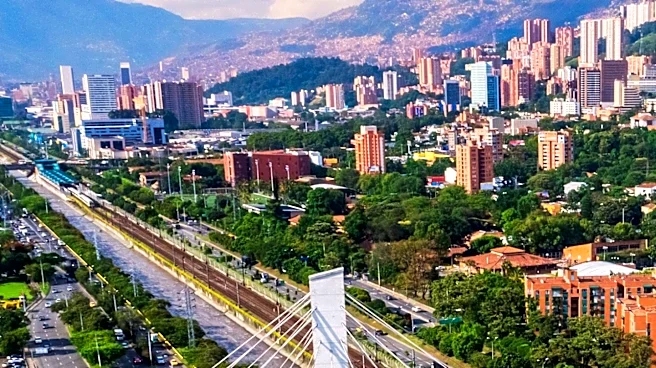
Medellín, Colombia, is increasingly recognized as a leading destination for digital nomads. The city's appeal stems from its consistent spring-like climate, affordable cost of living, and a robust community of remote workers. Outsite, a company specializing
in coliving spaces, has established facilities in Medellín's Manila and El Poblado neighborhoods. These spaces are specifically designed to cater to the needs of remote workers, offering amenities such as high-speed internet and work-friendly environments. The coliving locations are strategically situated near restaurants, parks, and top coworking spaces, providing convenience and fostering a sense of community among digital nomads. The availability of such infrastructure supports a lifestyle that combines professional productivity with cultural immersion and social engagement in a foreign city.
Why It's Important?
The rise of Medellín as a digital nomad hub signifies a broader trend in how and where work is conducted, particularly for Americans seeking greater flexibility and new experiences. This shift impacts local economies in cities like Medellín, as digital nomads contribute to the service industry, housing market, and local businesses. For individuals, it offers an alternative to traditional office-based work, potentially leading to improved work-life balance and personal growth through exposure to diverse cultures. The development of coliving spaces addresses a key need for remote workers: community and suitable living/working conditions in unfamiliar environments. This trend also highlights the increasing global competition among cities to attract remote talent, influencing urban planning and service development to accommodate this growing demographic.
What's Next?
As Medellín continues to attract digital nomads, further development in infrastructure and services tailored to this demographic is anticipated. This could include an expansion of coworking spaces, specialized networking events, and services designed to ease the transition for international remote workers, such as visa assistance and local integration programs. Other cities globally may look to Medellín's success as a model for attracting digital nomads, potentially leading to increased competition and innovation in the coliving and remote work support sectors. The long-term impact could also involve policy discussions around taxation, healthcare access, and legal frameworks for remote workers residing in foreign countries for extended periods.
Beyond the Headlines
The phenomenon of digital nomadism, exemplified by Medellín's popularity, reflects a significant cultural and economic shift away from traditional employment models. It challenges conventional notions of work, residency, and community. On a deeper level, it raises questions about global citizenship, the impact of transient populations on local cultures, and the evolving definition of 'home.' The ethical implications of gentrification in popular digital nomad destinations and the sustainability of such lifestyles also warrant consideration. As more individuals embrace this way of life, there will be a growing need for international cooperation on issues like social security, healthcare portability, and equitable economic development in host countries.