





What's Happening?
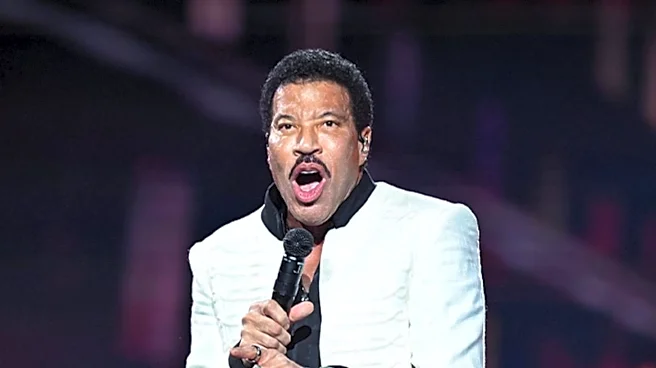
In 1982, Lionel Richie secured the No. 1 position on the Hot 100 chart with his solo single 'Truly.' This achievement marked a significant milestone in Richie's career, establishing his success as a solo artist. Prior to this, Richie had already experienced
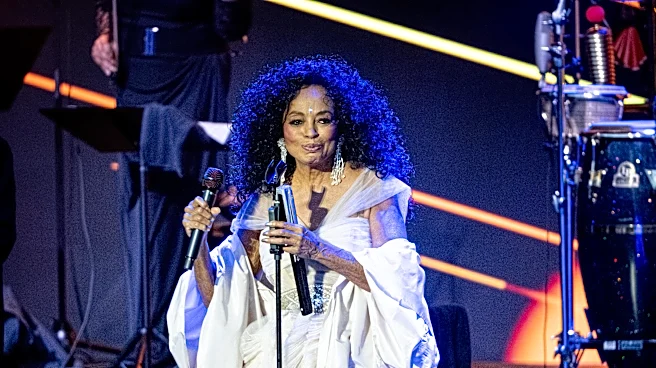
considerable chart success as a member of the group The Commodores, where he contributed to hits such as 'Three Times A Lady' and 'Still.' His collaborative work also saw him reach the top of the charts with Diana Ross for their duet 'Endless Love.' The success of 'Truly' solidified his transition from group and duet performances to a prominent solo career, demonstrating his continued appeal and songwriting prowess.
Why It's Important?
Lionel Richie's ascent to the top of the Hot 100 as a solo artist with 'Truly' is important for several reasons within the U.S. music industry. It showcased his ability to maintain and even elevate his commercial success independently, a challenging feat for many artists transitioning from established groups. This achievement underscored his versatility as both a performer and a songwriter, proving his appeal across different musical contexts. For the music industry, it highlighted the potential for artists to successfully pivot their careers, influencing how record labels and producers might approach talent development and marketing strategies for artists seeking solo ventures after group success. His continued chart dominance also contributed to the evolving sound of pop and R&B in the early 1980s, setting trends and inspiring other musicians.
What's Next?
Following the success of 'Truly,' Lionel Richie's solo career was poised for further growth and critical acclaim. This No. 1 hit laid the groundwork for a string of highly successful albums and singles throughout the 1980s, including 'Can't Slow Down' and 'Dancing on the Ceiling.' His continued success would establish him as one of the era's most iconic and commercially viable artists. For the music industry, Richie's trajectory served as a blueprint for managing the careers of artists transitioning from group acts to solo endeavors, emphasizing the importance of strong songwriting and a distinct artistic identity. His future work would continue to shape the landscape of popular music, influencing subsequent generations of R&B and pop artists.
Beyond the Headlines
Lionel Richie's solo success, particularly with 'Truly,' extends beyond mere chart performance to illustrate broader themes of artistic evolution and individual identity within the music industry. His ability to craft universally appealing songs, whether with The Commodores, Diana Ross, or as a solo act, speaks to a profound understanding of popular music sensibilities. This transition also highlights the often-complex dynamics of group dissolution and the courage required for artists to forge new paths independently. Ethically, it underscores the value of artistic integrity and the pursuit of one's unique voice, even when faced with the pressure to replicate past successes. Culturally, Richie's music, including 'Truly,' became part of the soundtrack of the 1980s, reflecting and shaping the emotional landscape of the time for millions of listeners across the U.S. and globally.