
What's Happening?
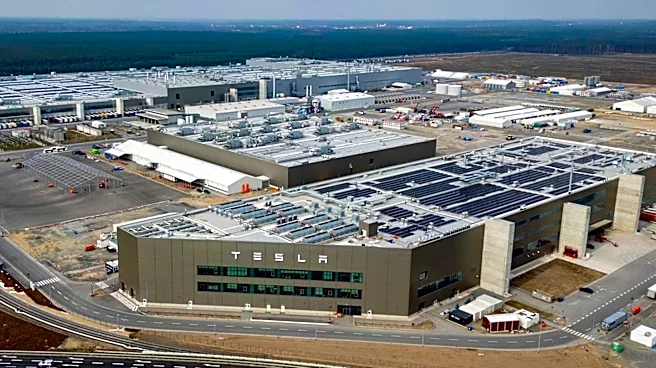
Tesla has filed a tax-incentive application, internally named 'Project Crystal Sun,' for a proposed $10.1 billion vertically integrated solar-cell and module manufacturing plant in Fort Bend County, Texas.
The application, filed under the Jobs, Energy, Technology and Innovation (JETI) program with Lamar Consolidated ISD and the Texas Comptroller of Public Accounts, outlines a massive investment: approximately $1.5 billion in real property and $8.6 billion in equipment and personal property. The spending is front-loaded, with about $2.33 billion in 2026, $3.29 billion in 2027, and $4.49 billion in 2028, targeting commercial operations by the first quarter of 2029. The proposed campus, spanning about 3,050 acres near Richmond/Needville, would include ingot manufacturing, wafer manufacturing, coating, metallization and printing, cell testing, and cleanrooms, indicating a comprehensive ingot-to-cell (and potentially module) production facility. Kroll's economic statement attached to the filing projects 9,712 permanent jobs and a significant economic impact for Texas, including roughly $107 billion in GDP impact and $6.4 billion in state and local tax revenue over 38 years.
Why It's Important?
This proposed $10.1 billion investment represents Tesla's largest U.S. manufacturing investment detailed in a Texas incentive form and signals a significant push into domestic solar production. The strategic rationale is clear: domestic cell manufacturing reduces tariff and supply-chain risks, allowing Tesla to supply its Buffalo residential assembly, third-party installers, its own storage-plus-solar packages, and utility projects. This initiative aligns with Elon Musk's public target of achieving 100 GW per year of U.S.-manufactured solar power for Tesla and SpaceX. While the factory is not yet a committed project and Tesla is evaluating sites across multiple U.S. states, the substantial capital allocation indicates a serious intent to scale up its solar manufacturing capabilities. The project's success could bolster U.S. energy independence, create thousands of jobs, and significantly contribute to the nation's renewable energy infrastructure, impacting the broader energy sector and supply chains.
What's Next?
The 'Project Crystal Sun' proposal is currently in the site-selection and incentive bid phase, meaning the factory is not yet a committed project. Tesla's application explicitly states it is evaluating other states and that the Texas site's economics are less favorable without the JETI limitation and local abatements. For construction to begin this year, Texas must win the site competition, and local approvals must proceed rapidly. The Comptroller's office still shows the application in the posted/supplement phase, not an executed JETI agreement. After a completeness review, the Comptroller will recommend the project to the Governor, and both the school district and Governor must agree. Fort Bend County would also need to establish the reinvestment zone. If built, commercial operations are targeted for Q1 2029. The project's realization hinges on securing favorable incentives and outcompeting alternative locations, which will determine the future of this significant solar manufacturing endeavor.
Beyond the Headlines
This ambitious project underscores the growing demand for renewable energy infrastructure, driven in part by the increasing electricity needs of advanced technologies like artificial intelligence. Elon Musk has explicitly linked large-scale solar production to AI electricity demand, suggesting a synergistic relationship between these two rapidly expanding sectors. The vertical integration planned for 'Project Crystal Sun,' from ingot to cell manufacturing, reflects a broader industry trend towards controlling the entire supply chain to enhance efficiency, reduce costs, and ensure reliability. The potential for this plant to supply a diverse range of applications—from residential rooftops to utility-scale installations and potentially even space-based power for SpaceX—highlights Tesla's comprehensive vision for energy solutions. This move could also intensify competition within the U.S. solar manufacturing sector, pushing other players to innovate and expand their domestic production capabilities.