



What's Happening?
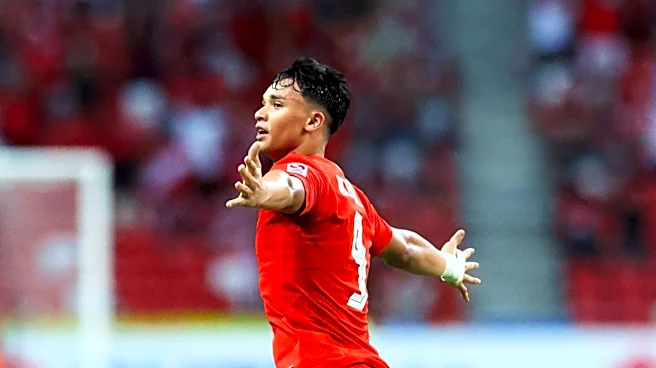
During the FIFA ASEAN Cup match between Singapore and Malaysia on October 1, the host broadcaster provided commentary that was widely criticized for being unusual and out of context. Mediacorp, which broadcast the match, acknowledged viewer concerns and stated
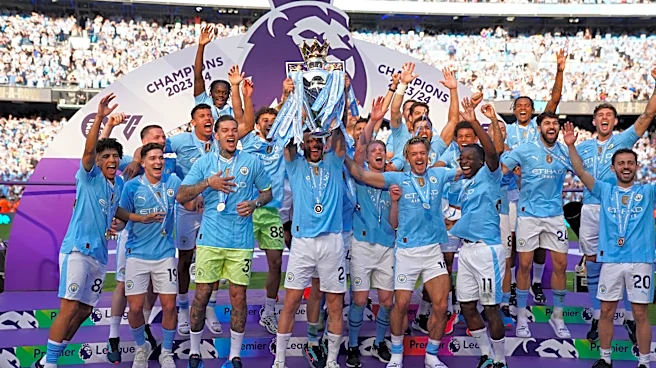
that the host broadcaster is preparing a corrected version of the commentary. Examples of the bizarre commentary included referring to Singapore's Harhys Stewart as Khvicha Kvaratskhelia, a player for the Georgia national team and Paris Saint-Germain, and mistaking Singapore's national anthem for Japan's. The commentary also featured irrelevant mentions of major European football clubs like Liverpool, Manchester City, and Borussia Dortmund, and even confused sports by referencing 'Ryder Cup captain Tiger Woods' during a football match. Despite speculation on social media that the commentary might have been AI-generated, The Straits Times reported that the commentary was not AI-generated and FIFA is investigating the matter with its broadcast partners. AI detection tools also indicated the audio was likely voiced by a human.
Why It's Important?
This incident highlights significant issues in sports broadcasting quality and the potential for misattribution of commentary. For sports fans, particularly in the U.S. and globally, accurate and relevant commentary is crucial for an engaging viewing experience. The confusion over national anthems and player identities can undermine the integrity of international sporting events and disrespect participating nations and athletes. The speculation about AI-generated commentary, even if disproven, reflects growing public awareness and concern about the use of artificial intelligence in media and the potential for its misuse or malfunction. This event could prompt broadcasters and sports organizations to re-evaluate their commentary production processes, quality control measures, and the training of their commentators to prevent similar occurrences in the future. It also underscores the importance of clear communication channels between host broadcasters and local affiliates to ensure content accuracy.
What's Next?
Mediacorp has stated that the host broadcaster is preparing a corrected version of the match commentary, which will replace the current version on mewatch once delivered. FIFA is also investigating the matter with its broadcast partners, suggesting potential repercussions or revised guidelines for future international match broadcasts. This investigation may lead to a review of the standards and practices for commentary provision in FIFA-sanctioned events. Broadcasters and streaming platforms like DAZN, which also carried the problematic commentary, may face increased scrutiny regarding their content delivery and quality assurance. The incident could also spark broader discussions within the sports media industry about the role of human commentators versus emerging AI technologies, and the necessary safeguards to maintain journalistic and broadcast integrity.
Beyond the Headlines
The commentary debacle touches upon deeper implications regarding cultural sensitivity and the global nature of sports broadcasting. Misidentifying national anthems or players from different countries can be seen as a lack of respect and understanding, potentially alienating international audiences. In an increasingly interconnected world, where sports events are consumed globally, broadcasters bear a heightened responsibility to ensure cultural accuracy and sensitivity in their content. The incident also subtly reflects anxieties surrounding the advancement of AI; the immediate public assumption that the commentary was AI-generated indicates a societal readiness to attribute errors or unusual occurrences to artificial intelligence, even when human error is the cause. This highlights a broader challenge for media organizations to transparently communicate their use of AI and to maintain trust with their audience amidst evolving technological landscapes.