







What's Happening?
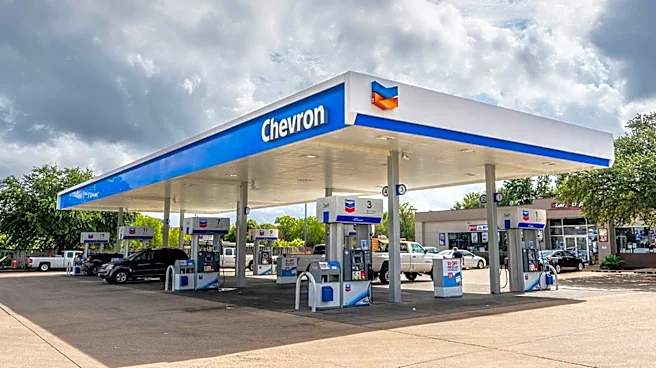
Chevron Corp., headquartered in Houston, is preparing to significantly increase its exploration capital budget by more than $500 million in 2027. This strategic move aims to leverage robust commodity markets and capitalize on recent internal organizational
changes that have streamlined decision-making processes. According to Chevron vice-chairman Mark Nelson, the company's global exploration opportunities are currently the most extensive and highest-quality seen in years. Since mid-2024, Chevron has expanded its portfolio by over 20 million acres and has integrated artificial intelligence tools to expedite the assessment of potential development sites. In the third quarter, Chevron secured six new blocks in the Gulf of Mexico, alongside additional sites in Angola, Nigeria, Guinea-Bissau, and Egypt. Future exploration efforts are expected to include regions such as Namibia, Equatorial Guinea, and Suriname. These initiatives are part of a broader corporate restructuring launched last year, which centralized exploration functions and grouped offshore and shale assets into dedicated divisions, aiming for approximately $3 billion in cost savings.
Why It's Important?
This substantial increase in Chevron's exploration budget signals a strong belief in the long-term viability and profitability of the oil and gas sector, despite ongoing global energy transitions. For the U.S. energy industry, Chevron's focus on the Gulf of Mexico, where it added six new blocks, reinforces the region's continued importance as a domestic energy source. The company's adoption of AI tools for project assessment could set a precedent for efficiency and technological integration across the industry, potentially leading to faster development cycles and reduced exploration risks. This investment could also stimulate economic activity in regions where Chevron expands its operations, creating jobs and driving demand for related services and technologies. The strategic centralization of exploration functions and the pursuit of cost savings reflect a broader industry trend towards operational optimization and efficiency, which could influence how other major energy companies manage their exploration portfolios and capital allocation in a volatile market.
What's Next?
Chevron anticipates drilling approximately 20 wells annually as it moves forward with its expanded exploration program. The company expects to increase its capital spend by 50% from its previous baseline next year, indicating a rapid acceleration of its exploration activities. This ramp-up will likely involve further deployment of advanced technologies, including AI, to identify and develop promising sites more efficiently. The success of these exploration efforts, particularly in the Gulf of Mexico and other key regions, will be closely watched by investors and industry analysts as it could influence Chevron's production outlook and market position in the coming years. The company's continued assessment of new regions like Namibia and Suriname suggests a long-term strategy for global portfolio diversification, which could lead to new partnerships and geopolitical considerations in the energy sector.
Beyond the Headlines
Chevron's aggressive expansion in exploration, coupled with its significant investment in AI, highlights a critical juncture for the energy industry. While there is a global push towards renewable energy, major players like Chevron are demonstrating a sustained commitment to fossil fuels, driven by perceived high-quality opportunities and strong commodity markets. This dual approach underscores the complex energy landscape, where traditional energy sources continue to play a vital role in meeting global demand. The integration of AI into exploration processes not only enhances efficiency but also raises questions about the future of human expertise in resource discovery and the ethical implications of AI-driven decision-making in high-stakes industries. Furthermore, Chevron's strategic focus on specific international regions could have broader geopolitical implications, influencing energy security and economic relationships between the U.S. and these nations.