








What's Happening?
Maritime technology developer Optimal Transit has introduced a new family of self-powered offshore data center platforms, named Kraaken, designed to provide a cost-effective alternative to traditional land-based infrastructure for artificial intelligence
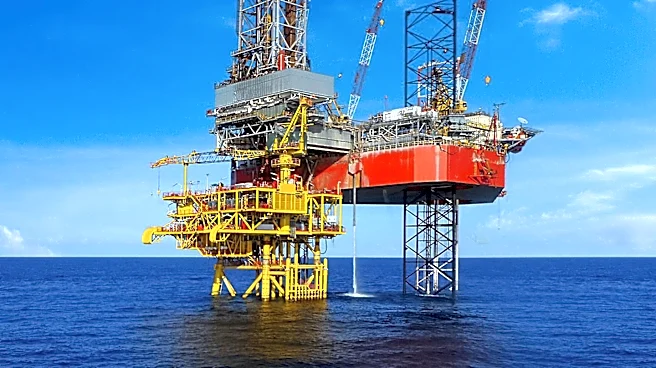
(AI) computing. The Kraaken platform is available in four standardized sizes, ranging from 10 MW to 100 MW, and can operate either permanently moored offshore or as self-propelled vessels capable of relocating to avoid severe weather. The platform generates power using Optimal Transit’s patented Digital Ocean Thermal (DOT) technology, which utilizes ocean temperature differences and waste heat from data center operations, eliminating the need for conventional fuel deliveries. The design is based on small waterplane area twin hull (SWATH) vessel designs and incorporates commercially available marine equipment and liquid-cooled modular data centers.
Why It's Important?
The introduction of the Kraaken platform addresses significant constraints facing AI infrastructure, such as access to electricity, cooling water, land, and permitting. By moving data center infrastructure offshore, Optimal Transit aims to meet the growing demand for power, water, and land driven by AI advancements. The platform's ability to generate its own electricity and cooling could result in significantly lower operating costs compared to conventional land-based AI data centers. This innovation reflects a broader trend of leveraging maritime infrastructure to support energy-intensive computing applications, as AI developers seek reliable power supplies for next-generation data centers. The potential cost savings and operational efficiencies could make the Kraaken platform an attractive option for AI developers and other industries requiring substantial computing power.
What's Next?
Optimal Transit plans to use proceeds from its ongoing Series A fundraising to complete engineering work suitable for American Bureau of Shipping review and to undertake digital twin validation of the propulsion and power generation systems. The company aims to establish production capable of delivering up to 20 of the 100 MW platforms annually through partner shipyards, contingent on a planned Series B financing in 2027. The long-term ambition for Optimal Transit extends beyond AI computing, as the same platform could eventually support offshore power generation, communications, desalination, and other infrastructure serving governments, utilities, and coastal industries.