


What's Happening?
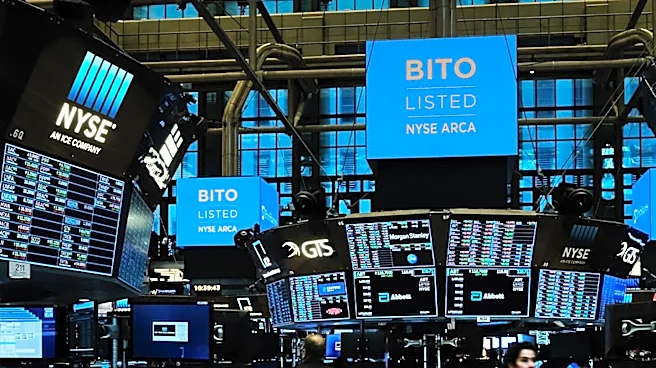
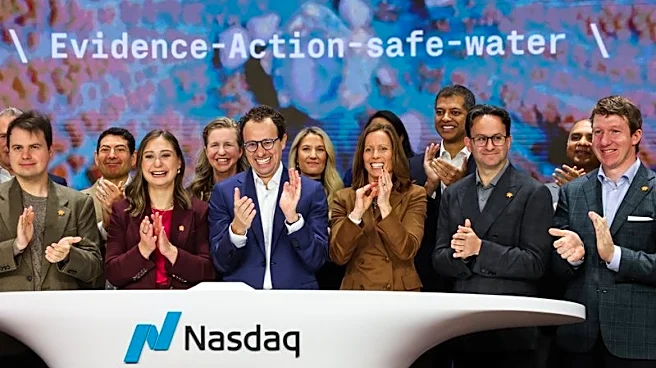
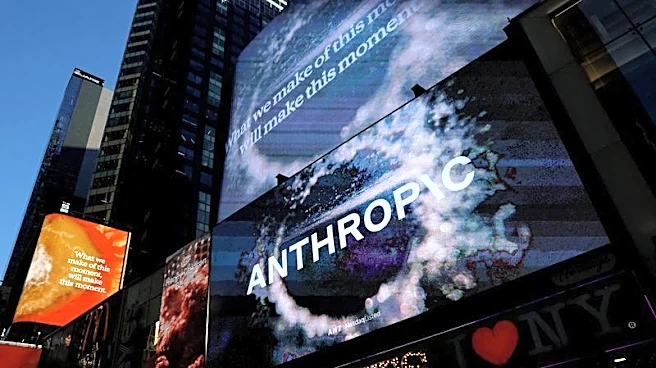
The artificial intelligence company Anthropic recently completed the largest initial public offering (IPO) in history, raising approximately $80 billion. Founded in 2021 by former OpenAI employees due to safety concerns, Anthropic initially considered
operating as an AI safety research lab before developing its AI product, Claude. Claude, known for its coding capabilities, has seen significant adoption by businesses, generating over $33 billion in the first nine months of the current year. Despite its commercial success, Anthropic explicitly states that its advanced AI systems pose "catastrophic or existential risks to humanity." The company has demonstrated a commitment to AI safety by canceling a $200 million deal with the Department of Defense to prevent its tools from being used for autonomous weapons or mass surveillance, a deal subsequently picked up by OpenAI. The IPO saw a 30% surge on its first day, followed by a wider sell-off on the second day, reflecting investor caution in the AI market.
Why It's Important?
Anthropic's record-setting IPO underscores the immense investor confidence and rapid growth within the artificial intelligence sector, positioning AI as a critical component of the U.S. economy. The company's dual focus on commercial success and explicit acknowledgment of "catastrophic or existential risks to humanity" highlights a growing tension between technological advancement and ethical responsibility in the AI industry. Its decision to forgo a lucrative defense contract for ethical reasons sets a precedent for other AI developers regarding the responsible deployment of powerful AI systems. The volatility of Anthropic's stock post-IPO, with an initial surge followed by a sell-off, indicates that while there is significant excitement around AI, investors are also seeking stability and safety, potentially shifting focus towards more traditional dividend stocks. This dynamic could influence future investment strategies and regulatory discussions surrounding AI development and deployment in the U.S.
What's Next?
Anthropic faces the challenge of balancing its ambitious vision of building a "country of geniuses" to solve humanity's greatest problems, such as curing cancer and Alzheimer's, with the substantial financial commitments required for its operations. The company has committed to spending approximately $100 billion on Amazon's computing power over the next decade and has about $900 billion in future compute commitments. This necessitates burning a significant amount of cash, with an estimated $71 billion burn over the next 12 months. Consequently, Anthropic may need to continue raising capital in an environment that could see less investor enthusiasm for AI and higher interest rates. The ongoing debate about AI's potential for both immense benefit and existential risk, as highlighted by experts like Geoffrey Hinton, will likely intensify, influencing public discourse and potentially leading to increased calls for regulation and oversight in the AI sector.
Beyond the Headlines
The narrative surrounding Anthropic extends beyond its financial performance to the profound ethical and societal implications of advanced AI. The company's origin, stemming from safety concerns at OpenAI, and its explicit warnings about AI's potential for catastrophic risks, bring to the forefront the urgent need for robust ethical frameworks and human oversight in AI development. The cancellation of the Department of Defense contract illustrates a proactive stance on responsible AI use, challenging the traditional pursuit of profit at all costs. This move could inspire other tech companies to consider the broader societal impact of their innovations. The long-term implications involve not only the potential for AI to revolutionize fields like medicine but also the critical need to prevent its misuse for harmful purposes, such as autonomous weapons or mass surveillance, thereby shaping the future trajectory of human-AI interaction and governance.