





What's Happening?
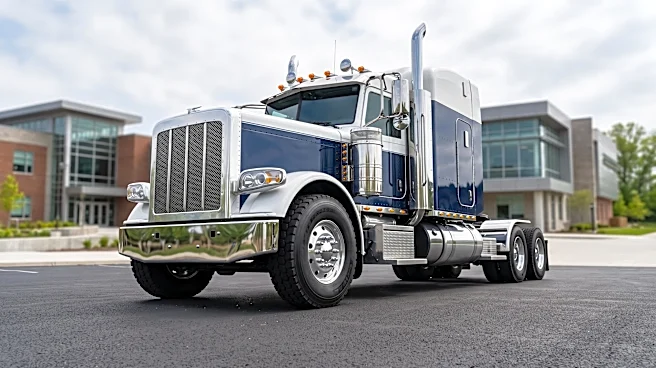
TransTech, in partnership with Asheville Buncombe Technical Community College (A-B Tech), is offering Commercial Driver's License (CDL) training programs in Asheville, North Carolina. These programs aim to meet the high demand for truck drivers in the region,
which serves as a crucial freight corridor with major routes like I-40, I-26, and US-74. The training includes Class A and Class B CDL options, with flexible schedules including full-time, part-time, and weekend classes. Students receive instruction in both theoretical knowledge and practical driving skills, utilizing late-model equipment. A significant advantage of this program is the on-site CDL skills testing, eliminating the need for graduates to schedule separate appointments at state DMV locations. Orientation sessions are held monthly at the Ferguson Center for Allied Health and Workforce Development on the A-B Tech campus.
Why It's Important?
The initiative directly addresses a critical shortage of licensed truck drivers in Western North Carolina, a region vital for distribution and logistics. The continuous growth in these sectors necessitates a steady flow of freight, making the availability of skilled drivers essential for local businesses and regional carriers. By providing accessible and comprehensive CDL training, TransTech and A-B Tech are helping to sustain the supply chain and support economic activity in the mountain corridor. The program also offers significant economic opportunities for individuals, with new CDL drivers in the area typically earning between $58,000 and $72,000 annually, and entry-level positions starting at $48,000 to $55,000. This provides a clear pathway to a well-paying career for residents of Asheville and surrounding counties.
What's Next?
New training sessions for CDL programs are scheduled to start every two weeks, with orientation sessions occurring approximately once a month. This continuous intake model suggests an ongoing effort to rapidly train and deploy new drivers into the workforce. The partnership will likely continue to monitor the demand for truck drivers in the region and adjust its program offerings accordingly. As more graduates enter the field, the local and regional freight movement is expected to become more efficient, potentially leading to improved logistics and reduced transportation costs for businesses. The success of this program could also serve as a model for other regions facing similar driver shortages.
Beyond the Headlines
The collaboration between TransTech and A-B Tech highlights a broader trend of educational institutions partnering with private companies to address specific workforce demands. This model is crucial for bridging skills gaps in essential industries like transportation and logistics. Beyond the immediate economic benefits for graduates and businesses, a robust trucking workforce is fundamental to national infrastructure and economic stability. The program's focus on on-site testing streamlines the certification process, reducing barriers to entry for aspiring drivers and accelerating their integration into the workforce. This approach not only supports individual career development but also strengthens the resilience of regional supply chains against future disruptions.