








What's Happening?
Several major technology companies, including Anthropic, Google, Stripe, and Salesforce, have collectively invested $915 million in a large-scale carbon-capture initiative focused on marine carbon removal. This venture, known as Frontier Climate, aims
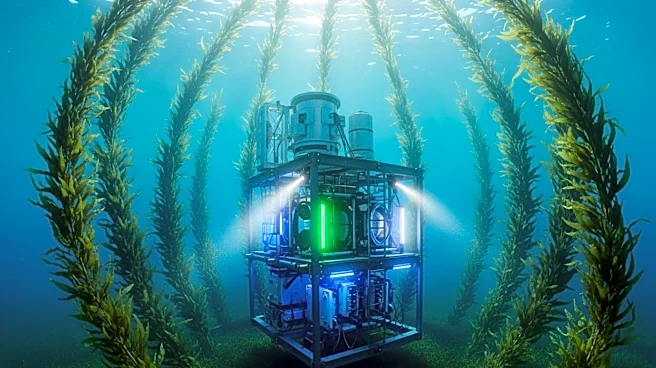
to alter ocean chemistry to absorb more carbon dioxide, a method that has been controversial and is legally restricted by international conventions. The initiative seeks to provide upfront funding to carbon-capture startups, which will eventually generate carbon credits for the investors. Frontier Climate is currently on track to remove about 50,000 tonnes of CO2 this year and has evaluated over 500 startups to date. The project portfolio includes various methods such as biomass carbon removal, direct air capture, and marine carbon removal, with a focus on scalability.
Why It's Important?
This investment marks a significant step in the tech industry's efforts to address climate change by reducing carbon emissions. The focus on marine carbon removal is particularly noteworthy due to its potential to counteract ocean acidification, which poses a threat to marine biodiversity. The initiative also highlights the growing importance of carbon credits in achieving corporate sustainability goals. By investing in carbon-capture technologies, these companies are not only working to offset their own emissions but also setting a precedent for public-private partnerships in environmental innovation. The success of this venture could lead to broader adoption of similar strategies across various industries, potentially accelerating global efforts to mitigate climate change.
What's Next?
For the initiative to reach its ambitious goals, significant advancements in technology and infrastructure are required. Scaling up to remove one gigaton of carbon per year would necessitate thousands of coastal treatment sites and a fleet of cargo ships, along with advancements in calcination technology to reduce costs. Additionally, the project must demonstrate minimal ecosystem risks and develop robust ocean models to quantify carbon removal. As the initiative progresses, it will likely face scrutiny from environmental groups and regulatory bodies, necessitating transparent and effective communication of its environmental impact.