

What's Happening?
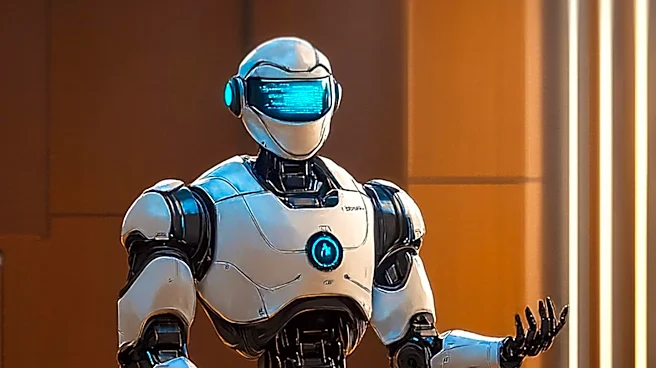
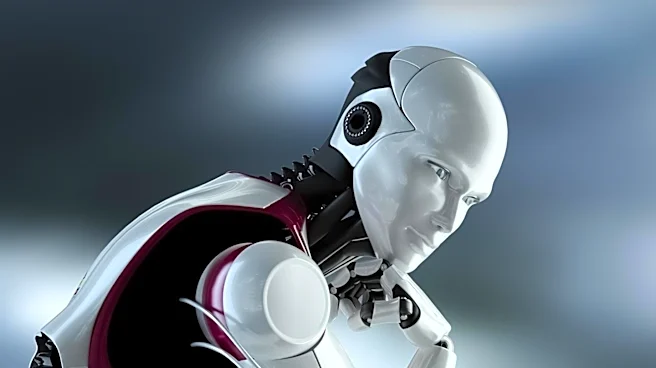
XPENG, the automaker, introduced its new humanoid robot named IRON and its supporting AI architecture in Guangzhou on November 25, 2026. The company's immediate goal for IRON is to train it as a store assistant in XPENG's car stores, with a public release
targeted for 2027. According to CNBC, mass production is slated for January 2027, sales for the second quarter, and deliveries later in the year. IRON's hardware boasts 76 degrees of freedom and over 1,500 tactile sensing points, covering more than 80% of key body areas. It is powered by three proprietary Turing AI chips that support its onboard models and whole-body control. The robot's Turing Physical AI Architecture, also known as VLA 3.0, integrates perception, planning, and physical action through a continuous feedback loop. This architecture includes System 0 for underlying body functions, System 1 for fast responses using XPENG’s VLA 2.0 model, and System 2 for higher-level planning that combines vision-and-language task planning. XPENG co-president Brian Gu emphasized the challenge of coordinating these functions for complex tasks like walking, answering questions, and completing work simultaneously without errors.
Why It's Important?
The introduction of XPENG's IRON humanoid robot signifies a significant advancement in the practical application of robotics and artificial intelligence within the retail sector and potentially beyond. This development could redefine customer service and operational efficiency in physical stores, starting with XPENG's own automotive retail outlets. The integration of advanced AI for perception, planning, and physical action in a humanoid form factor suggests a future where robots can perform complex, interactive tasks previously requiring human intervention. This could lead to increased automation in various industries, impacting labor markets and operational costs. For the technology sector, it highlights the growing capabilities of AI and robotics, pushing the boundaries of what machines can achieve in real-world environments. The company's ambition to make robotics a meaningful part of its business within two to three years, with potential profitability as early as 2027, indicates a strong belief in the commercial viability and transformative potential of such technologies. This could spur further investment and innovation in humanoid robotics across the U.S. and global markets.
What's Next?
XPENG has outlined several key milestones for IRON's deployment. The company plans to begin mass production in January 2027, followed by store-assistant training in the first quarter of 2027. Sales are projected to commence in the second quarter, with deliveries expected later in the year. XPENG co-president Brian Gu indicated that household deployment of humanoid robots could be considered one to two years after successful commercial deployment, suggesting a phased approach to market penetration. The company is also exploring a business model that extends beyond hardware sales to include software subscriptions and an open platform for partners to customize functions and validate new skills. This indicates a future where IRON could evolve into a versatile platform for various business applications. Potential reactions from major stakeholders could include increased competition in the humanoid robotics market, with other tech and automotive companies accelerating their own development efforts. Businesses in retail and other service sectors will likely monitor IRON's performance closely to assess the feasibility and benefits of integrating similar robotic solutions into their operations.
Beyond the Headlines
The development of XPENG's IRON humanoid robot touches upon deeper implications concerning the future of work and human-robot interaction. As robots like IRON become more capable of performing complex tasks in public-facing roles, ethical considerations regarding job displacement, the nature of customer service, and the societal impact of widespread automation will become increasingly prominent. The emphasis on 'coordination' rather than just individual movements highlights the sophisticated level of AI required for seamless integration into human environments, raising questions about the future evolution of artificial general intelligence. Furthermore, the long-term ambition for home deployment introduces significant challenges related to safety, privacy, and the emotional and psychological impact of having humanoid robots in personal spaces, especially concerning interactions with children, the elderly, and pets. The success of IRON could also influence regulatory frameworks for robotics, prompting discussions on standards for robot behavior, accountability, and data privacy. This development represents a step towards a future where the lines between human and machine labor become increasingly blurred, necessitating a broader societal dialogue on adaptation and integration.