





What's Happening?
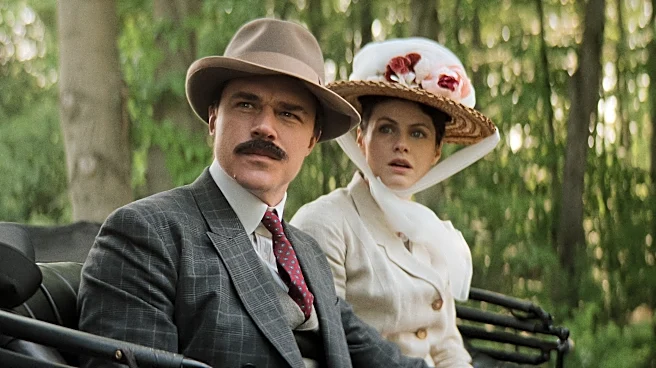
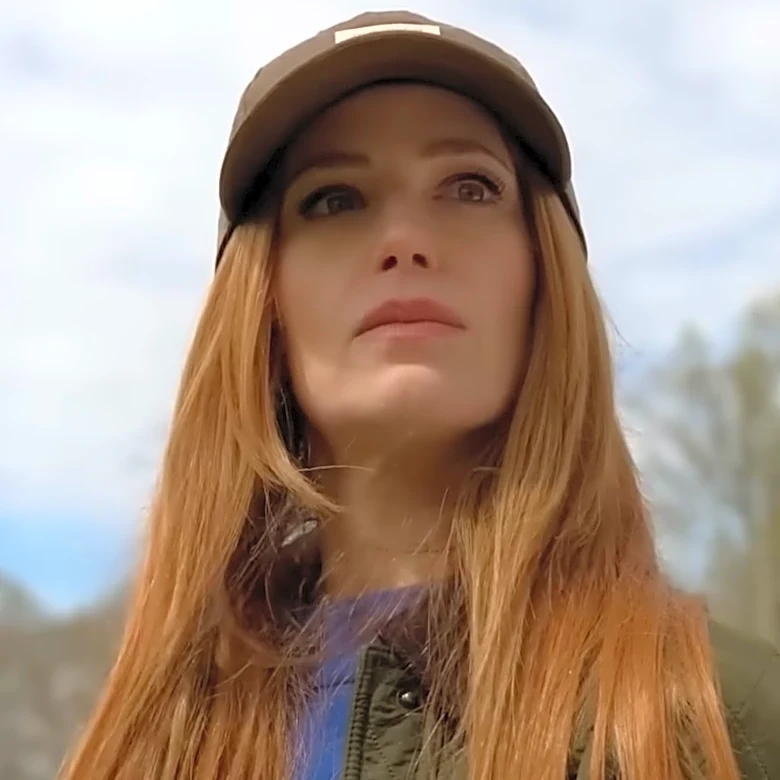
The biographical film 'Hershey,' directed by Mark Waters, is facing criticism for its overly simplistic and superficial depiction of Milton Hershey's life. The movie, starring Finn Wittrock as Milton Hershey and Alexandra Daddario as Kitty Hershey, is described
as a 'blandly flavored trifle' that fails to capture the complexities of Hershey's extraordinary life. According to the review, the script, penned by Bubba Fulcher, Will Hardy, and Timothy Michael Hayes, appears to have been heavily influenced by the Hershey estate, which collaborated 'to ensure an authentic portrayal of Milton’s life.' This collaboration reportedly led to the omission of significant conflicts and challenges Hershey faced, such as the 1937 factory riot over worker hours and salaries, and the initial opposition to his orphanage/school plans. The film also glosses over the historical fact that Hershey's school, initially for 'poor, healthy, white male orphans,' did not admit minority children until 1968.
Why It's Important?
This critique highlights a recurring issue in biographical filmmaking where historical accuracy and narrative depth can be compromised by the involvement of the subject's estate or family. For U.S. audiences, particularly those interested in historical figures and corporate legacies, such a sanitized portrayal can lead to a skewed understanding of significant historical events and individuals. The film's failure to address the complexities of Milton Hershey's life, including labor disputes and the exclusionary policies of his philanthropic endeavors, misses an opportunity to engage with important social and economic issues of the past. This approach can perpetuate a one-dimensional view of historical figures, potentially undermining critical thinking about the origins and evolution of major U.S. industries and philanthropic institutions.
Beyond the Headlines
The criticism of 'Hershey' extends beyond mere cinematic quality, touching upon deeper ethical considerations in historical storytelling. The influence of the Hershey estate on the film's narrative raises questions about the balance between honoring a legacy and presenting a truthful, comprehensive account. This situation underscores the challenge filmmakers face when dealing with subjects whose stories are intertwined with powerful corporate entities. The omission of details like the 1937 factory riot or the racial exclusion in Hershey's school until 1968 not only simplifies history but also potentially whitewashes aspects that are crucial for a complete understanding of the era and the figure. This practice can inadvertently shape public perception, making it difficult for audiences to critically assess the past and its implications for contemporary society.