



What's Happening?
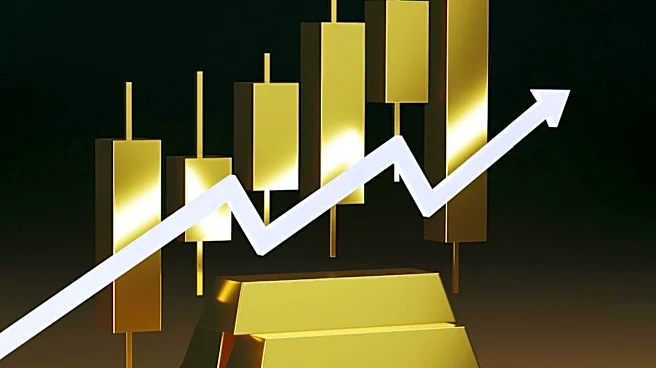
Gold prices are experiencing fluctuating trends, with spot gold trading at approximately $4,055.35 an ounce as of November 9, 2026. This follows a roughly 4% increase since the U.S. midterm elections. However, market analysts are presenting mixed outlooks
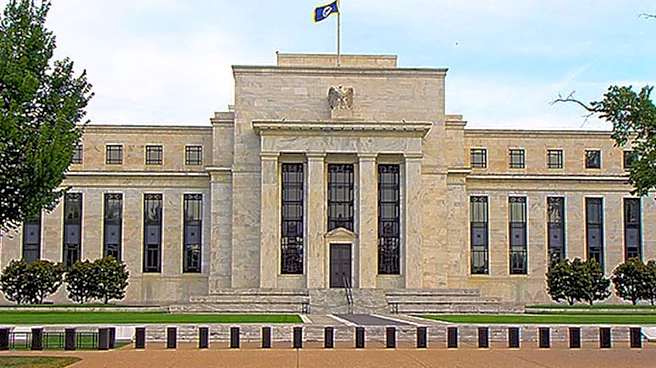
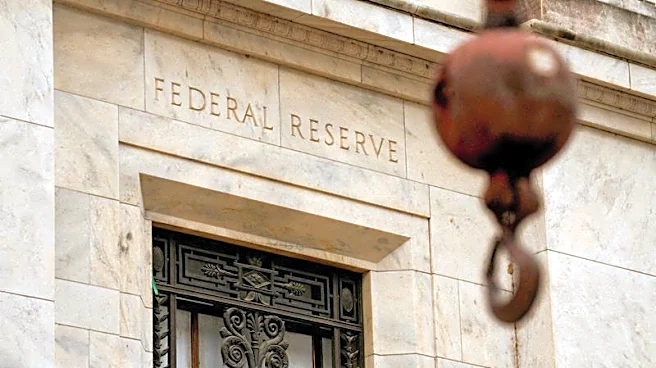
for the precious metal. Goldman Sachs recently revised its gold price forecasts downwards, setting year-end 2026 at $4,150 an ounce (from $4,650) and year-end 2027 at $4,800 (from $5,400). This adjustment, according to Goldman Sachs strategists led by Lina Thomas, is attributed to a hawkish shift in the Federal Reserve's stance and its impact on investor positioning. Despite this, Goldman Sachs maintains a constructive long-term view, citing strong central bank buying as a key support factor, expecting purchases of 60 tonnes per month through 2026 and 2027. Conversely, economist Peter Schiff suggests that a Democratic-controlled Congress could lead to increased government spending, more regulation, larger budget deficits, and higher inflation, which he believes would be bullish for gold.
Why It's Important?
The divergent forecasts for gold prices highlight significant economic and political factors influencing the U.S. financial landscape. Goldman Sachs's revised outlook reflects concerns about the Federal Reserve's monetary policy, indicating that higher interest rates could temper investor enthusiasm for gold, traditionally seen as a safe-haven asset. This perspective suggests that the cost of holding non-yielding assets like gold becomes less attractive when interest rates rise. On the other hand, Peter Schiff's bullish stance underscores the potential impact of fiscal policy and inflation. If a Democratic-controlled Congress leads to increased government spending and larger deficits, it could devalue the dollar and fuel inflation, making gold a more appealing hedge against economic uncertainty. These differing views create a complex environment for investors, who must weigh the implications of monetary tightening against potential inflationary pressures and increased government expenditure. The direction of gold prices can also signal broader market sentiment regarding economic stability and the effectiveness of current fiscal and monetary policies.
What's Next?
The trajectory of gold prices will likely be influenced by upcoming economic data, particularly U.S. inflation reports, and further communications from the Federal Reserve regarding its monetary policy. If the Federal Reserve continues its hawkish stance or signals further rate hikes, gold could face downward pressure as the opportunity cost of holding it increases. Conversely, any indications of a dovish shift or a pause in rate hikes could provide support for gold. The actions of the newly configured Congress will also be crucial. Should Congress pursue policies leading to significant increases in government spending and larger budget deficits, as economist Peter Schiff suggests, inflationary expectations could rise, potentially boosting gold's appeal as an inflation hedge. Investors will also be closely watching central bank gold purchasing trends, which Goldman Sachs identifies as a strong structural support for the metal. Any changes in the pace or volume of these purchases could impact gold's price stability.
Beyond the Headlines
The current dynamics in the gold market extend beyond immediate price fluctuations, touching upon deeper concerns about global economic stability and trust in traditional financial systems. Goldman Sachs's observation that the conversation is shifting from whether to own gold to where to store it points to broader anxieties regarding reserve security and cross-country trust. This suggests a growing geopolitical dimension to gold investment, where nations and institutions may be seeking to diversify their reserves away from traditional fiat currencies due to geopolitical tensions or concerns about financial system vulnerabilities. The sustained central bank demand for gold, even amidst a hawkish Federal Reserve, reinforces this idea of gold as a fundamental store of value and a hedge against systemic risks. This trend could signify a long-term shift in global financial architecture, where gold plays an increasingly important role in national reserves and as a symbol of economic sovereignty, reflecting a potential erosion of confidence in the existing global monetary order.