





What's Happening?
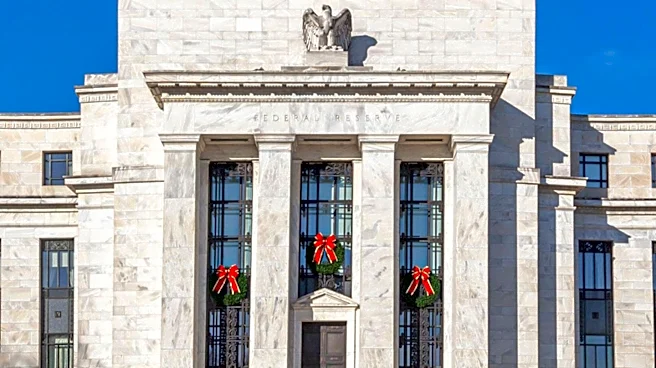
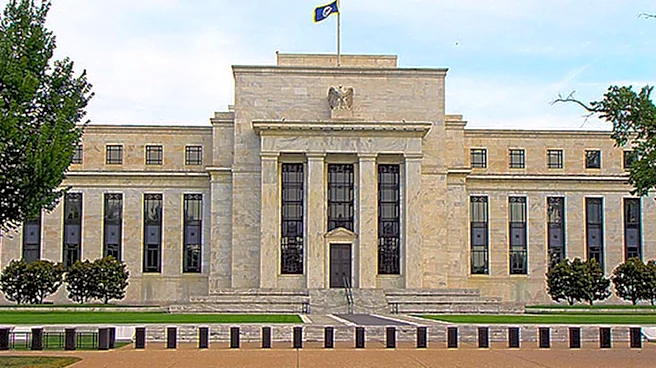
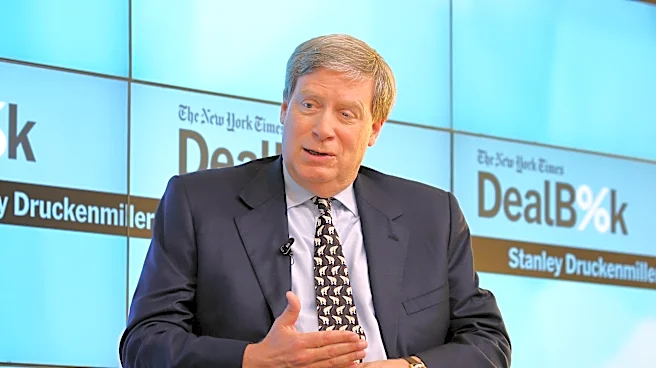
Billionaire investor Stanley Druckenmiller has announced that his family office is currently neither long nor short the stock market, describing it as 'taking a break' that could last from two days to six months. This decision comes as the Federal Reserve,
under Chair Kevin Warsh, continues to tighten monetary policy. Druckenmiller expressed a lack of clarity regarding the next 12 months, stating he has rarely experienced such uncertainty in five decades of investing. His portfolio adjustments, which began before a recent market correction, include reducing U.S. equity positions to $4.47 billion across 65 holdings by September 30, down from $5.21 billion across 95 holdings in June. He also closed call options tied to major indices and significantly cut holdings in semiconductor companies like Taiwan Semiconductor and AMD. Druckenmiller attributes this cautious approach to the Federal Reserve's regime change, noting that the central bank is raising rates, credit spreads are widening, and the commodity rally appears to have peaked. He also holds an outright bet against copper.
Why It's Important?
Stanley Druckenmiller's neutral stance is significant due to his long and successful investment record, which includes an average annual return of about 30% for three decades. His decision to 'take a break' signals a period of heightened uncertainty in the market, particularly concerning the Federal Reserve's aggressive tightening cycle. For corporate boards and investors, his admission of low visibility is more impactful than a definitive forecast, suggesting a need for increased optionality and liquidity. The investor's view that the Fed is determined to tighten policy, potentially leading to economic disappointment in the second half of 2027, could influence corporate capital spending decisions and risk management strategies. His specific bet against copper, an industrial metal sensitive to construction and electrical demand, indicates a belief that physical investment, possibly in data centers, may slow down. This perspective offers a cautionary signal for sectors heavily reliant on continued infrastructure buildout.
What's Next?
The market will closely watch for further signals from the Federal Reserve regarding its monetary policy path, particularly the December 9 projections. Druckenmiller's assessment suggests that policy tightening will continue into 2027, with potential economic repercussions manifesting in the latter half of that year. Investors and corporate leaders may adopt a more cautious approach, prioritizing capital preservation and flexibility. Key indicators to monitor include credit spreads and copper prices, as these reflect broader economic health and industrial demand. Druckenmiller himself is known for frequent trading and quick reversals, so his next portfolio filing in mid-February 2027 will be keenly observed for any shifts in his market outlook. Companies might consider staging capital spending, shortening commitments, and holding more liquidity to navigate the uncertain economic environment he describes.
Beyond the Headlines
Druckenmiller's 'flat-book signal' suggests that the range of plausible economic outcomes has widened to a point where a clear directional bet is difficult. This reflects a broader sentiment among some seasoned investors who perceive unprecedented economic and monetary policy shifts. His emphasis on the Federal Reserve's determination under Chair Warsh highlights a potential paradigm shift from years of accommodative monetary policy, which could have profound long-term implications for asset valuations and economic growth. The investor's nuanced view on artificial intelligence, favoring companies that apply the technology over those building its infrastructure, indicates a potential maturation in the AI investment cycle. This could lead to a reallocation of capital within the tech sector, moving from hardware and foundational infrastructure to application-layer innovations. The broader implication is a potential re-evaluation of growth drivers and risk factors in a higher interest rate environment, challenging investment strategies that thrived during periods of cheap capital.