




What's Happening?
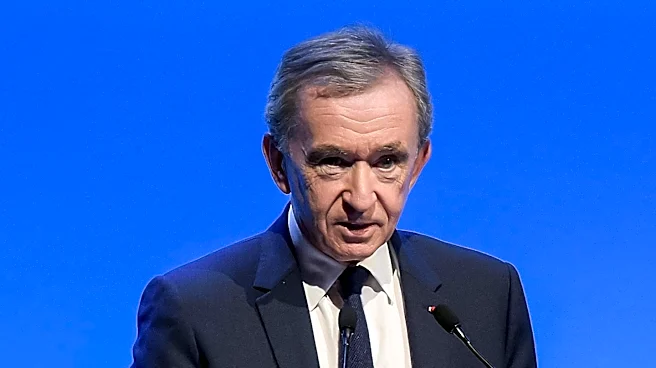
Bernard Arnault, Europe’s wealthiest individual, has extended his retirement age to 95 for his role as managing general partner of the holding company that controls LVMH. This decision, revealed in company filings in Paris, allows the 77-year-old to remain
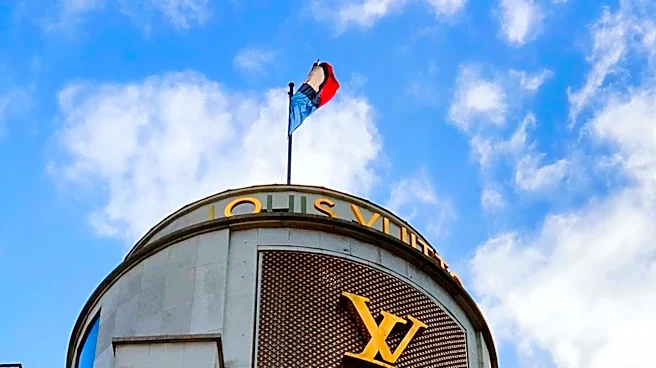
at the helm of the luxury-goods empire for an additional 18 years, potentially until 2044. The move is part of a broader corporate restructuring aimed at solidifying his family’s control over LVMH, which encompasses over 70 luxury brands including Louis Vuitton, Christian Dior, Dom Pérignon, and Tiffany. This new age limit significantly surpasses the current limits for his chairman role at Christian Dior SE and the chief executive position held by his son, Antoine.
Why It's Important?
This extension of Bernard Arnault's leadership signifies a strong commitment to long-term family control and strategic continuity within one of the world's leading luxury conglomerates. For the U.S. market, where LVMH has a significant presence through brands like Tiffany & Co., this ensures stability in leadership and potentially consistent brand strategies. The decision could influence succession planning discussions in other family-controlled global enterprises, highlighting a trend where founders or long-standing leaders opt to maintain direct oversight for extended periods. It also underscores the unique governance structures often employed by luxury groups, prioritizing legacy and brand heritage over conventional corporate retirement norms. Investors and stakeholders will likely view this as a move to preserve the distinct vision and operational philosophy that have driven LVMH's success.
What's Next?
With Bernard Arnault's extended tenure, LVMH is expected to continue its current strategic trajectory, focusing on brand acquisition, global expansion, and maintaining its dominant position in the luxury market. The corporate restructuring efforts will likely proceed with the aim of further entrenching the family's influence and ensuring a smooth, albeit distant, succession. While his sons hold key positions, Arnault's continued direct involvement suggests that any significant leadership transition is still years away. This stability could allow LVMH to pursue ambitious long-term projects and investments without immediate concerns about a change in top-level direction. Competitors and partners will be observing how this extended leadership impacts LVMH's agility and innovation in a rapidly evolving global luxury landscape.
Beyond the Headlines
The decision by Bernard Arnault to extend his leadership to 95 raises broader questions about corporate governance, the role of founding families in global enterprises, and the concept of retirement in the context of immense wealth and influence. It highlights a potential shift in perception regarding age and leadership, particularly in industries where experience and a deep understanding of brand ethos are highly valued. Ethically, it prompts discussions about opportunities for younger leadership within the company and the balance between continuity and fresh perspectives. Legally, such extended tenures, while permissible, can sometimes lead to debates about shareholder rights and corporate democracy. Culturally, it reinforces the idea of a 'dynastic' approach to business, where control remains within a family for generations, shaping the long-term identity and direction of iconic brands.